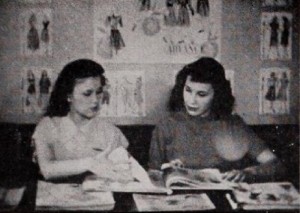
"One of the most unusual educational institutions in America, the John Hay High School, of Cleveland, Ohio, is devoted exclusively to courses that adapt the student to life in a business civilization. Business Champions, produced for the school by Anthony L. Cope, a John Hay instructor, provides fine coverage of all the school's activities. With the end product — a well adjusted citizen with a job — constantly in mind, Mr. Cope shows fully and intelligently how John Hay determines and develops the aptitudes of its students." Movie Makers, Dec. 1948, 492.
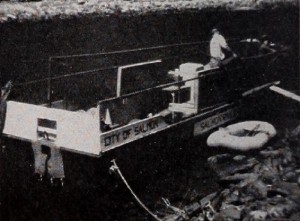
"Spanning the upper and narrower part of the State of Idaho from east to west, the Salmon River provides the original blueprint for one-way traffic. You either end up in western Idaho — or at the bottom of the river. Frank E. Gunnell ended up in Idaho. His coverage of this adventurous journey in The Salmon — River Of No Return is complete, carefully planned and splendidly competent. One becomes thoroughly familiar with the great, flat-bottomed barge, guided by giant sweeps fore and aft, in which the hazardous rapids of the Salmon are surmounted. One is charmed, even fascinated, by the deserted mining huts along the river and the few forlorn characters who still live amid this rocky wilderness. The Salmon — River Of No Return is a leisurely and well made record of a unique vacation adventure." Movie Makers, Dec. 1948, 492.
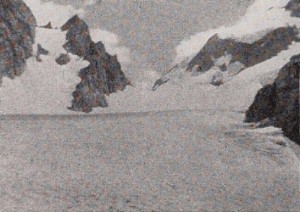
"The Blue refers to a glacier of majestic proportions high in the Olympic Mountains of northern Washington. Solduc, a small station in the Hoh Valley, is the point from which Theodore H. Sarchin and his two companions set out with high hopes to conquer the formidable ascent to the famous ice fields. Although they reach the Blue, the sun has been there first, softening the ice, and they must turn back without having attained the summit. Inherent in the film is a deep reverence for the wild, inspiring beauty of the scene, which clearly communicates itself to the audience — no small achievement in an amateur travel study. This reverence never becomes mawkish, the pedestrian titles and homely incidents en route nicely counterbalancing it. Superior camera work makes the most of the setting, while skillful editing combined the best elements of story and scene to make a dramatic presentation. An expertly scored musical accompaniment adds impressively to enjoyment of Solduc To The Blue." Movie Makers, Dec. 1948, 492.
"It takes a good deal of ability to treat fishing cinematically. It takes still more ability to approach the subject with humor and yet avoid the ludicrous. O. L. Tapp has bypassed both pitfalls in his Rainbow Trail, a beautifully paced, short film that catches the fun of all fishing trips but still makes its point that the angler's life is not all sweetness and light. Mr. Tapp precedes the body of his film with several short shots and titles, all of which indicate a candid view of a fisherman's veracity. The succeeding footage illustrates his thesis, as he (thin, awkward) and a companion (stout, capable) undergo the rigors of stream fishing. That a reviewer can sum up the characteristics of the two men in two adjectives is an indication of the excellent casting and direction which distinguish Rainbow Trail." Movie Makers, Dec. 1948, 491.
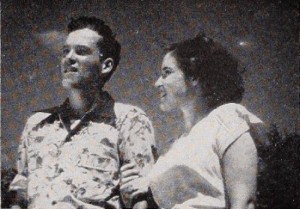
"What would have been an excellent film under any circumstances becomes outstanding as a group production. Produced by the Minneapolis Cine Club, it was originally conceived by William S. Block, carried out under the supervision of G. L. Larson, with Earle E. Ibberson in charge of production, while club president Elmer W. Albinson did the final cutting and editing. All members contributed directly to the project, either in filming or by helping to complete the picture. In the film we accompany two teen-agers, a 4-H boy and girl, on a grand tour of the fair, visiting exhibits, marvelling at the livestock show,standing pop-eyed before the midway spectacles, puzzling over the complexities of modern art, gasping at the fireworks display against the night sky. A running gag furnishes comedy relief, while the wholesome charm of our young guides is revealed in a sympathetic and appealing fashion. The members' filming is consistently competent, and deft editing has made Minnesota State Fair a well integrated and thoroughly enjoyable entertainment." Movie Makers, Dec. 1948, 476, 491.
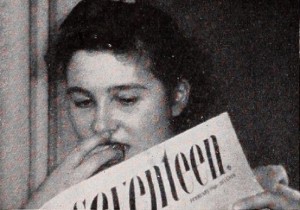
"In Maxine's Big Moment, William Messner proves that he knows the language of the motion picture, for he tells his tale in true visual terms. No subtitles are used, nor are they needed. This is a small film but a suave one, scarcely more than a vignette, as it recounts the excitement of a teen age girl's first formal dance. In it, the producer has used high key lighting that is eminently suitable in portraying a lovely young girl anticipating and preparing for a party. The choice of softcolor backgrounds adds immensely to the mood of the film, and the imaginative mirror shots in which the young lady pins a corsage to her gown are noteworthy. Fine editing and smooth transitions, in addition to good acting, combine to make a delightful and entertaining home movie." Movie Makers, Dec. 1948, 476.
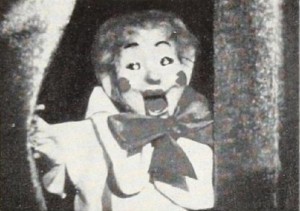
"The construction and performance of marionettes are skillfully pictured in Life Hangs By A Thread, by Paul R. Elliott and Joseph Dephoure. Aided by skillful lighting, a fine sound track perfectly harmonized with the action and an intelligent script, interest is closely held from the time a marionette is a lump of putty to its moments of glory when, in the hands of an experienced operator, it seems to take on a life of its own. Perhaps the most impressive thing about Life Hangs By A Thread is its careful step by step planning, indicating the sound belief by its producers that a movie should tell as much as possible pictorially, with the commentary used only to enhance the visual appeal." Movie Makers, Dec. 1948, 475-476.
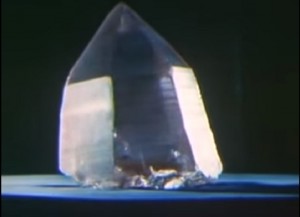
"Crystals While You Wait is a record of the triumphant climax of long scientific research for a crystal substitute. Desperately needed as a filter in expanding telephone transmission lines, the final perfection of this synthetic crystal could not have been more exciting electronically than is this study of it esthetically. To it, Joseph J. Harley has brought creative imagination, absolute accuracy and a rich sense of this drama in a laboratory. Ethylene diamine tartrate (known to electrical engineers as E.D.T.) is the hero of this scientific saga. And a colorful one it is in this record of its synthesis into electrically usable crystalline form. From its provocative lead title assembly — double exposed on a dynamic pattern of back lighted crystals — through its smoothly integrated sequences of laboratory procedures, to its triumphant and stirring climax, Crystals While You Wait is a moving marriage of science and cinematics." Movie Makers, Dec. 1948, 475.
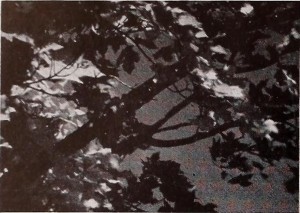
"In Autumn, Martin E. Drayson extends brilliant camera handling to embrace a quality ordinarily associated with painting, raising his film several notches above the usual autumnal study. Call this quality expressionism, a term we are familiar with in the paintings of Manet, Cezanne, Gauguin or Vlaminck. Literally painting with light the shades and hues of the season, sheer poetry is produced by their reflections in the shimmering surface of a pond, which unique camera viewpoint was used for the climax of the footage. The film escapes the static quality often noted in nature studies by the dexterous changing of camera position; added to this are the natural movements created by the wind brushing softly through the dry leaves, or, again, by gentle ripples momentarily disturbing the water's glassy surface." Movie Makers, Dec. 1948, 475.
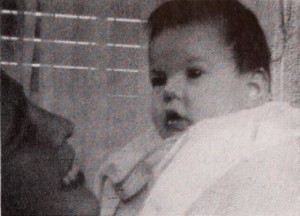
"The Unexpected, by Ernest H. Kremer, is that rara avis of the amateur movie world, a perfectly produced and universally entertaining family film. It is no secret, surely, that taking pictures of one's family outranks all other reasons prompting a home filmer to buy his camera. It is an equally open secret that the results, generally, are those that only a mother could love. Judged impersonally and by even the simplest movie standards, the technique is sloppy, camera treatment dull and continuity non-existent. But now, with The Unexpected, family film making takes on new stature and its apostles may speak with new pride. The picture tells a simple tale: A man arrives home and finds a note from his wife. Unexpectedly, she writes, she has been called to the city, but there is food in the icebox, et cetera, etc. Later that evening, after a suavely developed interlude of husbandly miming, the wife returns and announces that she expects a baby. The rest of the rewardingly short reel records early activities in the life of the infant, capped by a swift and comic climax. A simple tale, but superbly told. Mr. Kremer's technical skill, developed through years of competent 8mm. work, is more than a match for this, his first 16mm. production. Perhaps most outstanding among the picture's many fine points is its admirable economy of footage. Running a scant 325 feet of film, it has a sense of pace regrettably rare in amateur movies. Mr. Kremer, for example, recognizes the lap dissolve as a spatial transition, not a specious ornament — and he uses it as such with telling effect. His editing is crisp, his camera treatment incisive and his continuity planned and purposeful. The Unexpected, in proving that excellence can join hands with the hearthside, should be a ringing challenge to all family filmers." Movie Makers, Dec. 1948, 474-475.
Total Pages: 299
 Amateur Cinema