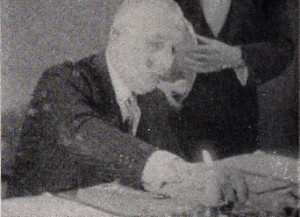
"When a preaching film turns out to be entertaining, the advice it offers is more likely to be remembered and heeded. In Time To Consider, a film that advocates bicycle safety, the Fourfold Film Society dramatized its subject with delightful imagination and refreshing use of the black and white medium. A pompous gentleman, after being splashed by a bus on the way to his club, vents his ire by "writing to the Times." A messenger takes the envelope, which is addressed simply Time," and starts off on his bicycle, only to be run over in traffic. The film then switches to fantasy, as the messenger, dressed now in white livery, delivers the letter to Father Time's heavenly establishment. Father Time, peering at a celestial television screen, observes the various traffic mistakes that mortals make and, between sequences showing unwise behavior, he dictates the rules of proper procedure. The production's few scenes of uneven exposure are more than made up for by its rich imagination, excellent cutting and refreshing camera treatment." Movie Makers, Dec. 1948, 495-496.
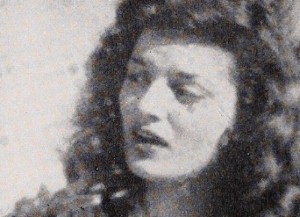
"Any husband who has ever cast a wandering eye in the direction of a neighboring redhead should appreciate the husband and wife shenanigans related in The Wolf's Tale, by George A. Valentine. In addition to its redhead, and further complications, Mr. Valentine's film has the great merit of brevity, though it includes several travel shots and a little family background as well as its smoothly told story. Basically, however, the moral of The Wolf's Tale is: Leave redheads alone." Movie Makers, Dec. 1948, 495.
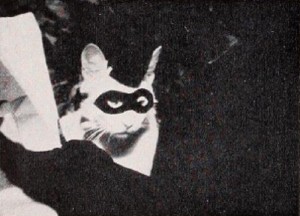
"In The Magic City, Virginia Rodarmor shows a warm and winning appreciation of a child's love for fairy tales. After a delightful opening scene in which Mother pantomimes the end of a bedtime story to her three young ones, we see them being tucked away for the night. The film then pictures the children enacting, in a dream, the tale their mother has just related. A regrettable lack of steady camera support is offset by the sensitive unfolding of the story, keeping it unerringly on a level of pure fantasy. A delightful and characteristic conceit is the sequence in which the witch is transformed into a pure white cat — complete with miniature black mask and peaked hat. The role is played by the family pet with superb and feline aplomb. The Magic City is a rewarding adventure into the difficult realm of motion picture fantasy." Movie Makers, Dec. 1948, 495.
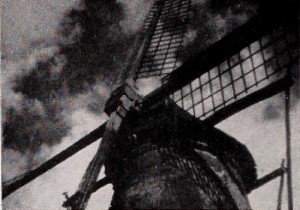
"In Rogge (meaning "rye"), G. J. Gast, jr., of Almelo, Holland, set out to make merely a record film of farm life in a community still committed to primitive farming methods. An ardent realist, he lived with his subject family for nearly a year before shooting his film, which was another full year in the making. An artistic cinematographer. he came up with something more than a record film. Exquisitely framed filter shots emphasize the contrasting values of light and shadow, giving the film a richly rewarding old-master quality. He achieved this by an understanding exploitation of the black and white medium. Unfortunately, his overzealous realism caused some of the interiors in Rogge to be very poorly lighted, detracting from the overall excellence of the film." Movie Makers, Dec. 1948, 495.
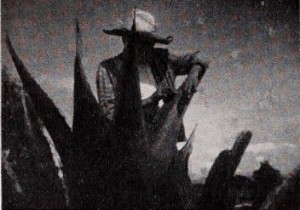
"Alan Probert has confined his study of Mexico to the primitive Otomi Indians. With startling clarity and a fine cinematic eye for detail, he presents the tribal group in a series of sketches that reveal the age old customs of their forefathers still in daily use — sowing and reaping, spinning and weaving, trading and worshipping. Remnants Of The Past is an expertly filmed factual account of the subject, which would have gained considerably from greater unity and a stronger ending." Movie Makers, Dec. 1948, 494.
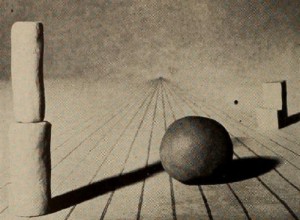
"Relegated to Honorable Mention only because it has been used commercially, No Credit, a brief and amusing abstract film, would under normal conditions have attained a much higher rating. The picture, produced by Leonard W. Tregillus, is a study in forms and movement accompanied by music. Much of it is single frame work that must have required infinite pains. This sounds alarmingly modern and incomprehensible; but since the film does not have to use words and depends for its effect solely on the cameraman's sense of timing, mood and music, the end result is altogether entertaining. Most abstract films seem to illustrate a theory or argue a point. No Credit stands on its own merits of creative form and movement, integrated with a stimulating musical score." Movie Makers, Dec. 1948, 494.
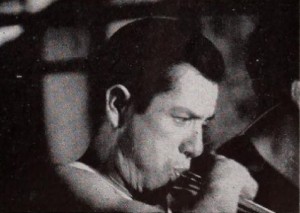
"Having forsaken the good land of tequila for the gypsy life of a trailerite, Ralph E. Gray presents what may be the last in a long line of distinguished human record films on America's southern neighbor. Mexico At Work And At Play displays recurrently in its many and varied sequences the opulent camera work and warm eye for color which have marked all of Mr. Gray's award winners. Mirrored in the present movie are such native occupations as sugar cane farming and mescal distilling, such handicrafts as glass blowing and opal polishing, such diversions as cock fighting and an Easter Passion Play. Mr. Gray's treatment of these and other colorful subjects is leisurely, loving and methodical." Movie Makers, Dec. 1948, 494.
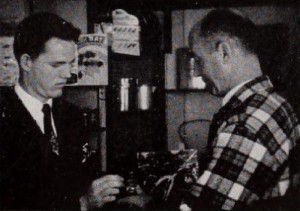
"May Day Conflict is a well executed and skillfully edited family story film of the conflict created by the opening of the trout season and a flower festival both falling on May first. The central character is a good loser (the husband, of course!), as he accompanies his wife to the flower show after elaborate preparations for his fishing trip. Herbert F. Sturdy has deftly woven into the story pattern light, humorous incidents to provide amusing comedy relief from his fine floral closeup studies. Expert camera handling and smooth transitions lend a semi-professional finish to the picture." Movie Makers, Dec. 1948, 493-494.
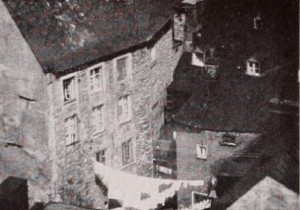
"A schoolboy in need of material for a geography theme launches Five Days From Home, as Dad gets out the movie projector and shows Son the cine harvest of his summer holiday. Among the points covered in a whirlwind auto trip from New York to Canada are Quebec City, Montmorency Falls, a Canadian pulpwood mill and Ausable Chasm, in New York State. Mannie Lovitch's handling of these subjects is always competent, occasionally excellent. His inquiring camera found many scenes of quaint charm in the old St. Lawrence city, and his full scale visual treatment of the pulp mill is sustained in interest by a superb bit of scoring with modern music by Virgil Thompson. Of especial note is Mr. Lovitch's mobile cross-cutting of the three to four themes which make up his coverage of the usually difficult Ausable Chasm." Movie Makers, Dec. 1948, 493.
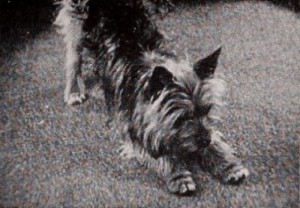
"A young girl and an Australian terrier named Frisco are the ingredients of Calling Frisco, a sound on film story in which the speech is mostly from the dog's point of view. The film flows smoothly through typical scenes of a day's activities of eating and going to market and playing, ending in a dramatic climax in which Frisco protects his young mistress by warning off an intruder. Imaginative viewpoints and pleasant interior lighting are employed throughout. The dog's simple tricks are well pictured without being obtrusive, while the scene in which a bouncing ball lands in a goldfish tank, with its accompanying sound track, has the creative fantasy of Disney. Cyril Stevens has made a jolly film. " Movie Makers, Dec. 1948, 493.
Total Pages: 299
 Amateur Cinema