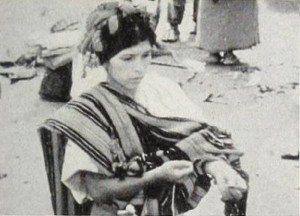
"Living Mayas of Guatemala is a detailed study of human ways which explains enough, as it goes along, to give those who see it a feeling of intimacy with the strange customs that are recorded. There have been special film studies of the descendents of the great Central Americans of the past, and these have singled out some particular phase of Mayan life. Giles G. Healey has set himself a larger task, in interpreting the unity of the modern Mayas by following them through each day of a week. We see them at home, at work, at play and engaged with singular devotion in religious observances. These major sequences of the various days are full, and, for the most part, adequately filmed. Action is not posed, and the audience shares with the cameraman the feeling of observing something so vital as to make the filmer's presence entirely incidental. The final portion of Mr. Healey's movie offers a fine record of the special religious ceremony at Chichicastenango. A deficiency of illumination, although a cinematographic detraction, does not destroy the illusion of participation in the communal devotions. Here is an important contribution to the study of folkways, done attentively, intelligently and interestingly." Movie Makers, Dec. 1942, 508.
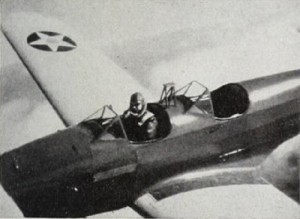
"The sound design and simplicity of operation of the Fairchild PT-19 Trainer are made crystal clear in the film of that name, produced for the Fairchild Aviation Corporation by Willard Pictures. A trade abbreviation for "Primary Trainer, Model 19," the title introduces a slim gold and blue aircraft which has become the familiar of thousands of young men trained in our fighting air forces. The outstanding feature of the ship is its low wing, monoplane design, duplicating (as closely as could be possible in a low powered trainer) the flight characteristics of a 2000 horsepower fighter. The Willard film brings out this point and others with factual clarity and cinematic distinction. The narrative is sparing and straightforward, with sound effects and music held to that wise minimum which does not overshadow the essential message." Movie Makers, Dec. 1942, 508.
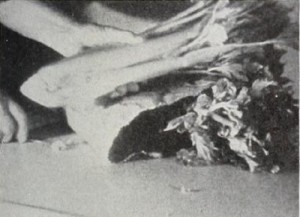
"White Hearts, filmed by William R. Hutchinson, whose Blossom Forth the Fruit placed in Ten Best last year, presents further evidence of Mr. Hutchinson's understanding of the treatment necessary in handling progressive developments in nature when it is used for educational subjects. This story of celery raising begins with shots of farmers preparing the rich black soil and concludes with sequences showing the produce, packaged, ready for shipment. One of the difficulties overcome was the achievement of variety of value in the scenes showing the white celery stalks in contrast with extremely dark earth. Human interest is introduced by including intimate shots of the workers. Logical progression, interesting compositional effects and a genuine feeling for texture and tactile values make this a fine study picture." Movie Makers, Dec. 1942, 508.
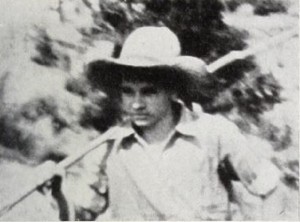
"The Utah Trail is what its producers call a "Cine Musical." In it, Al Morton and his wife have attempted to illustrate in movies a ballad which charmed them and to pay tribute pictorially to a region which they loved. They have been largely successful. The film's continuity is fluid and well integrated; the camera work is uniformly excellent and the double exposed color titles add greatly to the picture's feeling of competence and craftsmanship. Perhaps the Mortons' finest achievement in this production is the care and intelligence with which they have cut their footage to fit the ballad of their choice. The Utah Trail is a charming and colorful tribute to a well loved land." Movie Makers, Dec. 1942, 508.
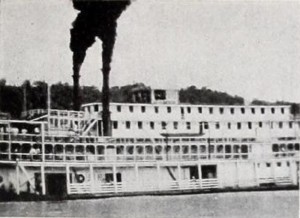
"The romance and color of a trip down the Ohio River on one of the Greene Lines few remaining flat bottomed passenger steamers are used to good advantage by Sidney Moritz in Sternwheeler Odyssey. The variety of the passing landscape, stops at wharves en route, with all the confusion of ropes, cargo and roustabouts, and general views of the stately river traffic plying the waterways gives this friendly little picture a touch of glamour. On board, the passengers and crew including "Ma" Greene, America's only woman river captain, present lively camera material. The churning paddle wheel, filmed from various angles, and the cascading waters that flatten into arcs of waves in the wake of the boat, become a motif that sustains the feeling of a ship in motion throughout the picture." Movie Makers, Dec. 1942, 508.
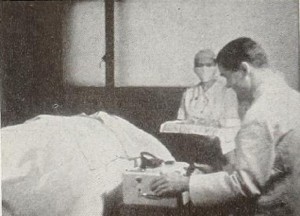
"We have seen many medical and surgical films made by Dr. Robert Mallory, III, and most of them have been excellent. This one, however, a picturization of an extremely delicate operation on the eye, surpasses them all. It is a suave and exact record of the complete operation, featuring splendid full frame closeups of the eyeball. The exposure and filming technique are flawless except for one or two scenes in slightly soft focus. We are well aware of the difficulties encountered in making a film of this kind, and we feel that Dr. Mallory has scored a distinct triumph here. He is an exceptionally neat worker, and the entire film shows the effects of care in production and editing. Movie makers who have aspirations to become filmers of medical or surgical material could well take this film for a pattern." Movie Makers, Dec. 1942, 508.
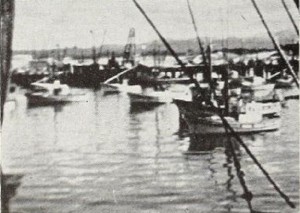
"Kenneth L. Lockwood is a newcomer to the tourney of Ten Best competition, but with Monterey Peninsula he seems to serve notice that his is a name with which to reckon. There is, throughout his immaculate 8mm. Kodachrome, a feeling of craftsmanship and care. Add to these fundamentals an unerring sense of composition and a nice eye for the importance of human interest — and you have an award winner in the making. Mr. Lockwood brings to the screen not only the windblown cedars and sun drenched missions, familiar symbols of the Monterey foreshore, but the life of its waterfront as well, redolent of fish, tarred nets and crabs steaming in a deep bellied kettle. One looks forward with interest to further work from this talented initiate." Movie Makers, Dec. 1942, 508.
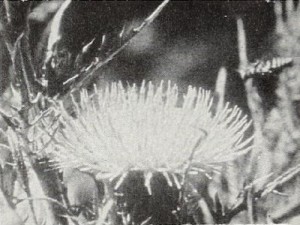
"The recipe for a film like Dad and I Took a Walk sounds simple enough. You take equal parts of Father and Son, add a cupful of scenery, season with judicious pinches of natural science — and cook till done. The secret, apparently, lies with the "cook till done" section; so much depends on the cook. But W. W. Vincent, jr., is a good chef, to judge by the results from his cinematic oven. In clean cut, tripod steady Kodachrome, he and his son are seen roaming the pleasant Wisconsin landscape, with nicely timed pauses to point out, one to the other, a nesting robin, a praying mantis or a bright snake asleep in the warming sun. As the two men discuss their finds, spoken titles are double exposed against appropriate backgrounds or the pages of a bird manual are inserted naturally in full frame closeups. Dad and I Took a Walk is an attractive blend of personal filmdom's most popular subjects — field, family and fauna." Movie Makers, Dec. 1942, 508.
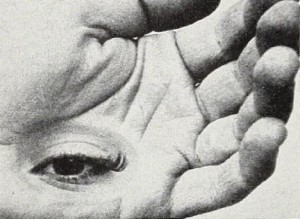
"Robert Fels and his associates have made in Cine Whimsy a sound motion picture unlike anything that has seen the screen previously. Its plot is based on the literal picturization of figures of speech and, when the characters in this movie "lose their heads," they actually do! Similarly, when the heroine "hits the ceiling," she does just that and, when the hero "pulls the wool over her eyes," he does so with the aid of a ball of yarn. We could go on citing this kind of thing indefinitely without revealing the picture's true quality, which lies in a surrealist treatment, always ingenious and sometimes fantastic. The priest who rises from the cactus to "hitch" the headless couple who are hauling a cart on a barren road represents the kind of imagery that is typical of the film. The sound track is a brilliant combination of commentation and "fake" lip synchronism. Mr. Fells conceived and directed the picture; Newell Tune filmed it, and Norman Johnson collaborated on the shooting script. Mr. Tune's trick work is among the best yet produced on 16mm." Movie Makers, Dec. 1942, 507-508.
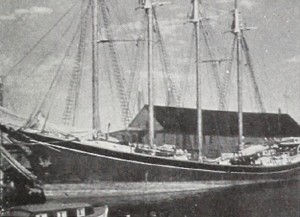
"Harley H. Bixler has made a competent travel study of Prince Edward Isle in his film, Canada's Garden Province. Rural and urban scenes, water and landscapes strike a balance in this thorough coverage of an enchanting scenic spot. One feature of Mr. Bixler's style is his ability to exclude irrelevant material and to include only those shots that are necessary to his descriptive narrative. Good judgment in the rotation of long and medium shots and closeups gives the movie interest and variety that lifts it above the usual run of travel pictures. Impeccable cinematography and a genuine appreciation of the atmosphere and mood of the surroundings are other distinguishing features." Movie Makers, Dec. 1942, 507.
Total Pages: 299
 Amateur Cinema