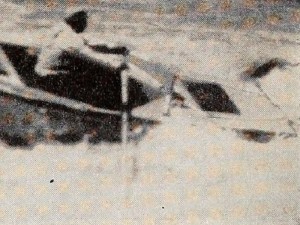
"In Grand Adventure Louise Fetzner presents a lively record of a daring run through the wild rapids of the Colorado River, as it courses the Grand Canyon from Lee's Ferry to Lake Mead. While thrilling scenes of the intrepid boats and boatmen provide the film's drama, Mrs. Fetzner has not overlooked human interest sequences on the small daily activities of these hardy adventurers. Generally good in photography and editing, the film falls off in pace somewhat in its latter portions. And perhaps the frequent inserts of a title-map of the Colorado are more hindrance than help in what is essentially an action picture." Movie Makers, Dec. 1952, 340.
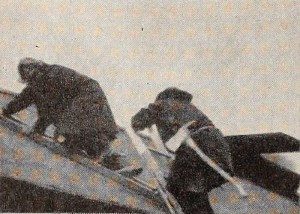
"In making Fire-Fighters Field Day, William Messner again has demonstrated his versatility with the motion picture camera. Choosing a subject which has only limited appeal, he makes it interesting nevertheless with good newsreel technique. Shooting the fire-fighting demonstration at New Haven, Connecticut, in one day's time and without advance planning, Mr. Messner captures the activities of the fire-fighters against a varied backdrop of flames, smoke, chemicals and steam. Since part of the action takes place in bright sunlight and part in shadow, the producer had to be alert in changing his diaphragm openings to insure even exposure. In view of the difficult and ever-changing light conditions, Mr. Messner deserves special commendation for the fidelity of his coverage. While the photography was outstanding, the accompanying tape track was a trifle noisy." Movie Makers, Dec. 1952, 340.
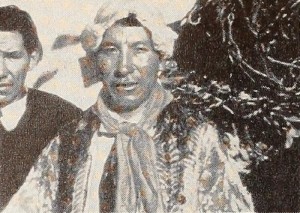
"The curious and, to many of us, unknown peoples of the Bolivian Andes are the subjects of Ciudad de la Paz (City of La Paz), an interesting and colorful film by Eduardo Douglas Di Fiore. The peasants' life, arduous and squalid amid the beauty of their mountain home, has been competently and effectively documented. Their vividly colored costumes and monochromatic, weather-beaten faces take on a new beauty through the dramatic use of an interplay between natural light and shadow, a device which is used tellingly throughout the film. There are times, however, when Mr. Di Fiore tends to belabor his point. These overlong sequences, despite the ever-present beauty and grandeur, detract on occasion from the overall quality of the picture. The music and narrative (in Spanish) complement the mood and tempo of the film effectively." Movie Makers, Dec. 1952, 340.
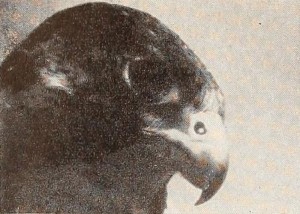
"You wouldn't think that just one movie maker could shoot all this footage (2400) on birds — no matter how interested and informed he was on the subject. And if that was the way you felt, you would be dead right. For Birds of Washington is the joint work of two men, J. Don Sutherland and Ralph E. Lawrence, who, because they customarily screen their films together, chose to submit them as one contest entry. Both, in any case, are highly competent movie makers and soundly informed students of bird life. For example, they preface briefly each new subject grouping with a pictorial survey of the type of terrain in which the birds will be found. Makes the film that much more informative. Outstanding, in our recollections, are their sequences on the American bald eagle and on an owl — whose family tree we regret we cannot recall." Movie Makers, Dec. 1952, 340.
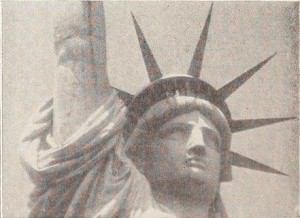
"Terry Manos is one New Yorker who has outdone himself (and all other native or visiting filmers) in recording on film the glittering surface of the world's greatest metropolis and America's premier tourist attraction. For The $24 Purchase is authoritatively stamped with the unfailing precision of the Manos technique, the perfection of his lighting and exposures, the beauty and balance of his compositions. Accompanying it is a musical score (admirably recorded) that is generally fresh and germane to the subject, a narrative that (although burdened unduly by the factual trivia of the tourist barker) is delivered with professional skill. In other words, here is a superb visual document. But a document only. For The $24 Purchase records only that surface city which the eye may see. Missing from its makeup are the searching, individual comments on that city of one human mind. Missing also — and perhaps more importantly — are the evocative emotions of one human heart, a heart reacting freely and unafraid of emotion to Manhattan's towers and tenements, to her opulent splendor and her economic ghettos. The film — tragically, if you will — has omitted any message. And, perhaps only by the margin of this omission, it has missed greatness as well." Movie Makers, Dec. 1952, 340.
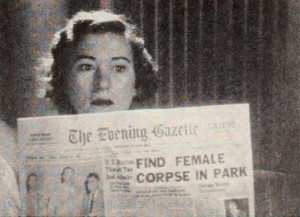
"A teen-aged girl — whose imagination has been excited by murder headlines in the local paper — and a mysterious new boarder in her mother's home are the ingredients of The Man With The Box, a superlative melodrama by James L. Watson. For here is as hair-raising a thriller as you could want to see. Mr. Watson tells his story through the interplay of image and counterimage, without benefit of dialog, and he tells it simply and well. Taut and well paced, the film should hold any audience in suspense-filled excitement from its quiet and clearly stated beginning right up to the shock of its logical and terrifying conclusion. The small cast has been cunningly chosen and wisely directed. The players, Cathy Moss as the inquisitive young girl and John Dowell as the strange boarder, give restrained yet moving performances, sustaining the film's mood admirably. The accompanying score not only complements the story line: it becomes, excitingly, an integral part of it. The Man With The Box returns to the first principles of the silent cinema with rewarding vitality." Movie Makers, Dec. 1952, 399-400.
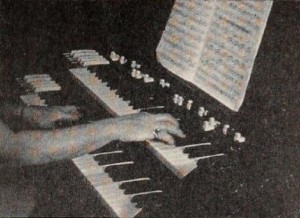
"At the outset of amateur movies' newest medium, magnetic sound on film, Robert G. Williams has accomplished a tour de force with his uncannily perfect synchrony of music to pictures in Poet and Peasant. As Kathryn Williams plays the familiar overture on the Hammond organ, the sound accompaniment matches the hand movements on screen without faltering and without once resorting to tricks or short cuts. Countless closeups of the organist's hands as they play give evidence of Mr. Williams's confidence and ability in the new field. But Mr. Williams also has made a lively and interesting picture from a subject usually so dull and static that, more often than not, it has stumped most professionals. Pacing his film with precision, he has used an amazing variety of camera angles, even shooting from above and behind the organ. Mrs. Williams's playing is competent and assured; but it is Mr. Williams's unusually good filming and recording techniques which bring her abilities vividly to life on screen." Movie Makers, Dec. 1952, 339.
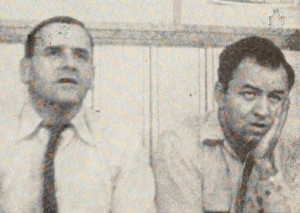
"Long a chef du cinema of pleasant family films concocted with a comedy flavor, George Valentine, has once again stirred up his favorite recipe. Outsmarted Smarties is a lively tale of a couple of mischievous husbands being outwitted by their wives. In his film, Mr. Valentine has combined clear plot structure, good cutting and sparkling lighting (especially in the interior scenes), to tie up a neat package with a punch ending. The acting is consistent with the demands of the story, and the attractive titles are intelligently inserted only where they are needed." Movie Makers, Dec. 1952, 339.
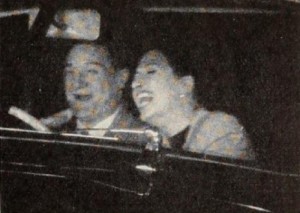
"Featuring a philandering wife, an illicit lover and a trusting husband, Olvido (Oblivion) proves once again, in the course of its sharply paced sequences, that the wages of sin is death. In it, the taut situations (which will lead at the last to murder and suicide) are so expertly directed and suavely acted that they develop always within the bounds of credibility. This achievement is especially noteworthy in an amateur photoplay of this melodramatic type. For others, attempting work in the same medium, have lapsed all too often into either the ridiculous or the farcical. Producers Oscar J. Bonello and Roberto Robertie, both officers of the Cine Club Argentino, in Buenos Aires, have used black and white film wisely, since its stark contrasts under low-key lighting are more effective than would be those of color. The Spanish sound track, employed sparingly and with dramatic force, is in keeping with the high standards of the rest of the picture." Movie Makers, Dec. 1952, 339.
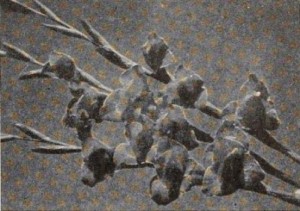
"Bulbs and Beauty reveals in painstaking detail the planting, cultivating and harvesting of gladioli in the vast fields surrounding the town of Momence in the state of Illinois. In this elaborate undertaking, Haven Trecker unfolds in well planned and profusely close-upped sequences the many colorful aspects of this popular plant in the life of flower-loving America. The harvesting sequence is followed by somewhat generous footage of a flower festival, the big annual affair in glad-minded Momence; and the festival in turn is followed by a seemingly endless parade in tribute to these bounteous blossoms. Bulbs and Beauty, accompanied agreeably by magnetic sound on film, appears to have been made for informative and record purposes. It fulfills these functions in a lively and competent manner." Movie Makers, Dec. 1952, 337, 339.
Total Pages: 299
 Amateur Cinema