"'Jeep Trails Through Utah' was produced by Stan Midgley with the use of a jeep rather than his faithful bicycle. He had to leave his bicycle at home, as the deep sands of Utah can only be traveled in a jeep. In his mechanical horse he criss-crossed one of the emptiest blanks on the American map. He leaves the traveled highways and goes back into the little known areas to find fantastically beautiful and unusual natural formations. He travels over sand-blown desert trails, up rocky mountain paths and through treacherous mountain gorges to produce a gem-like picture of Utah." La Canada Valley Sun, Sept. 9, 1971.
Film record of the 1951 and 1952 Rose Parades.
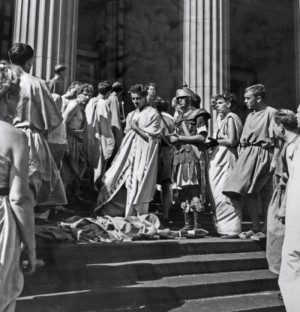
Charlton Heston stars in David Bradley's amateur adaptation of Shakespeare's Julius Caesar. "Julius Caesar was produced with amateur actors and makes impressive use of available, neoclassical Chicago locations, including the steps of the Art Institute and the pillars of Solider Field. But the film, which cost at least fifteen thousand dollars to produce, was seen by both the ACL and the local Chicago press as a quasi-professional--if independent--production; indeed, it was on the merits of this film that Bradley won his much-sought-after contract with MGM" Tepperman, 252-253.
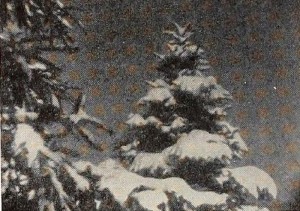
"With a sensitive feeling for nature's changing patterns, even in her least productive season, Herman E. Dow has captured the flavor and beauty of New England's quiet countryside in Woods and Waters of Winterland. Closeups of streams trickling through icebound banks and selective compositions of snow-laden boughs and bleak branches contribute to the overall theme of a pleasant scenic study. A musical accompaniment for the film is well chosen and recorded." Movie Makers, Dec. 1952, 341.
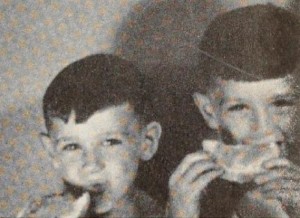
"Going back to The Lord's Prayer for the title of his picture, A. T. Bartlett has produced a handsome, heart-warming and technically able documentary on the theme "Our Daily Bread." In it one follows the staff of life from the vast and golden wheat fields of Australia, through the harvesting and milling of the grain, into the baker's hands and onto my lady's table. Give Us This Day is intelligently planned, smoothly developed and suavely executed. A simple but satisfying narrative continually relates the subject — as it should be — directly to human needs, and a pleasant musical score rounds out the presentation. Especially to be commended is the minimum of footage used by Mr. Bartlett in reporting on this age-old activity of mankind." Movie Makers, Dec. 1952, 339.
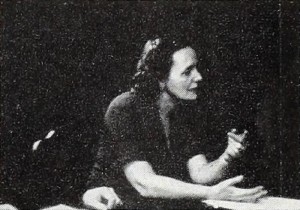
"If you are engaged in any phase of little theatre work, Prelude to Performance is certainly your picture. However, even if you are not engaged in any phase of little theatre work, Prelude to Performance is also your picture. That fact of universal appeal is the true measure of this movie's success. Made by John W. Jones with the cooperation of the London Little Theatre, in Ontario, Canada, the primary purpose of this picture was to outline (and, if possible, teach) the basic steps of putting a play together. This it most certainly does, from the inception of the idea down to the rise of the opening night curtain. But in the process — through a sound sense of cinematic treatment and smoothly integrated subtitles — the picture maintains a lively and appealing interest for all." Movie Makers, Dec. 1951, 412.
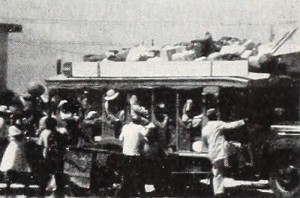
"Stanley Woolf's film tour of this fascinating island presents an entertaining record, in a pleasantly casual manner, of an American visitor's impressions of the Black Republic. The street scenes and detailed studies of its artisans at work provide engrossing fare, while the voodoo dances at the climax make an exciting film experience. Technically, Haiti — The Black Republic is a wise and workmanlike production. From the short period and superficial observations of a tourist's visit, one cannot, regrettably, ask for a great deal more. The haunting subject matter, however, prompts a fuller answer to such a demand — someday." Movie Makers, Dec. 1950, 467.
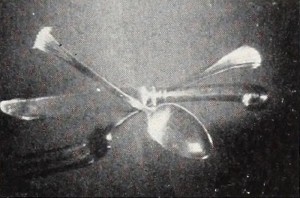
"Color, light and movement are skillfully and pleasurably combined in Jose M. Pavon's Form in Motion, an experimental film that "experiments" in the best sense of that word. Employing such simple properties as shower curtains, knives and forks and Mexican glassware, Mr. Pavon has used both his camera and his imagination to great effect. Unfortunately, the film from time to time moves beyond the subject matter limits set up by its title, an inconsistency which mars slightly the overall impact." Movie Makers, Dec. 1950, 467.
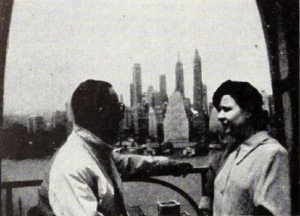
"There have been in the past, and will be in the future, a number of fine amateur films portraying the great moment of marriage, the ecstatic happiness of the honeymoon. But these films have featured, by and large, the young in age those blythe favorites of the Gods of Love with whom no fervor can seem foolish, no endearment an awkward jest. Not so in From This Day Forward. The protagonists here are people of adult experience and mature mind. But though no longer young in years, they are superbly and inseparably young in spirit. This quality, as well as good taste and graciousness — which are overtones more often missing with the young — illumines each charming foot of From This Day Forward. Othon Goetz enhances this spirituality in every phase of his production. His impeccable camera work seems to glow — where another's would merely sparkle. His compositions are so inevitable as to seem effortless, while his editing adds pace to an already attractive picture." Movie Makers, Dec. 1951, 410.
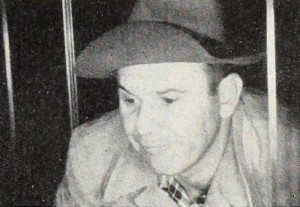
"Cal Duncan, the exuberant extrovert of Lee's Summit, Mo., has, in The Director, turned his high talents for low comedy on our own hobby of amateur movies. Both the hobby and the hobbyist's long suffering friends take quite a beating. In the person of Felix Fogbound, a perennial bird-brain in the producer's cinematic studio, Mr. Duncan combines all of the classic amateur idiocies with a flavoring of Hollywood hokum. His lampooning of personal movies is robust, rowdy and for keeps. When Fogbound swoops his camera in a dizzy pan shot, you have really had it. When he attacks editing with a pot of glue and his thumb-and-forefinger splicing technique, every movie maker will wince with horror. The director is a derisive and delightful burlesque, executed with an almost artless technical competence." Movie Makers, Dec. 1950, 468.
Total Pages: 299
 Amateur Cinema