"Symphony Of The Village: Bert Seckendorf and his Cine Special camera have caught the colorful activities of Greenwich Village in one of the best color documentaries on this subject made to date. This famed New York spot, with its renowned artists, artisans and craftsmen, is revealed in all its gay, Bohemian color as the camera chronicles the activities of sidewalk artists, potters, ceramists, wood carvers and makers of novelty jewelry. The excellent titling knits together all the scenes and sequences into another top-notch picture for which this filmer has become famous in amateur circles." American Cinematographer, May. 1951, 190-2.
"Sea Theme: M. R. Weinstein, J. C. Couffer and Conrad Hall have collaborated in the production of a thematic and quite pictorial account of a young couple with a sailboat at sea. The variety of moods are enhanced by the carefully chosen musical score, which has been combined with the film. The picture begins by showing the youth and girl loafing in the sun on the ship's deck. A breeze springs up and they go into action setting sails and the wheel for a cruise in the bay. The camera follows the craft, both in long shot and intimate medium on-deck shots as it churns through the water, runs into a calm, then again bends to the breeze and returns to port at dusk. Consistency of photographic quality is a highlight and the sound recording is quite professional. The picture was filmed with a Bolex H-16 camera and a variety of four lenses." American Cinematographer, May 1951, 190.
"Paradise Honolulu: Nobuo Miyaoka, using a Cine Special camera and Kodachrome film, has documented contemporary life in Honolulu as have perhaps few cine cameraists in recent years. The picture is essentially newsreel in style and depends upon titles to convey that which is not clear in the pictorial action. But interest is sustained in the careful selection of subject matter and the manner in which it has been photographed. A highlight is the fine night photography in color of Honolulu's annual lantern parade." American Cinematographer, May. 1951, 190.
"Our Friendly Enemies: This unique title has its origin in the fact that the Seminoles are the only native American Indians who have never signed a peace treaty with the government. Ralph E. Gray has chronicled in color with his 16mm Cine Special camera the contemporary life of the Seminoles living in Florida, picturing their activities against the backdrop of modern-day living and habits. Gray's reputation for camera and good editing has resulted in very professional results on the screen. Narration and sound effects on the recorded track round out the superior treatment of this better than average amateur effort." American Cinematographer, May 1951, 190.
"Monarch Butterfly Story: This film, with its carefully written and recorded narration, is equally meticulous in its photography which chronicles the life-cycle of the Monarch butterfly from egg to adult. Major Anderson and his wife Claire Louise have collaborated in producing one of the finest studies of insect life ever produced by a non-professional film maker, and already one large educational film distributor is negotiating for its purchase. Employing two Bolex H-16 cameras, the Andersons have produced several excellent sequences in time-lapse photography aided by equipment home-made for the purpose by Mr. Anderson. The picture opens with scenes showing adult Monarchs in natual habitat. Interesting facts regarding the butterfly are told in the narration. Then the egg-laying period is shown, followed by closeups of the egg, hatching of the pupa, and it ultimate growth to an adult through the various stages of metamorphosis natural to the Monarch. It is the meticulous ultra-closeup photography and the perfectly executed time-lapse camera work that gives this production its class, and easily makes it one of the best 16mm color films of the year." American Cinematographer, May. 1951, 190.
"King Bookie: John Cowart set himself a tremendous goal in undertaking the production of this dramatic film, which has to do with bank robbers. But thanks to his zeal, his all around ability in movie making, the sincerity and cooperation of his amateur cast, and the cooperation of local merchants who happily contributed the use of their business establishments for locations, he has turned out a highly creditable production. The picture opens with a girl, unwittingly involved in the robbery, relating to an attorney events of the story which is pictured in retrospect. King Bookie is an underworld character who plots the crime, involves several others, some of whom meet death by his gun when the proceeds are retrieved from one gang member who sought to double-cross King Bookie. Narration, dialogue and musical score are a commendable effort of sound-on-film recording." American Cinematographer, May. 1951, 190.
"Ah! Wilderness: The stark beauty of remote mountain and plain areas, as yet untouched by the unrelenting surge of modern civilization, has been caught by Charles Benjamin's camera and Kodachrome film. Adapted from the book Stone Dust, by Frank Ernest Hill, Benjamin's film opens with scenes of mountain peaks and passes in winter- peaks mantled in snow, and trickling brooks that somehow have evaded the wintry grip of Jack Frost. The picture progresses in a like manner through Spring, Summer and Autumn, rendering a pictorial account of the ever-changing seasons in one of the few remaining wilderness areas of America. The picture discloses skillful camera handling as well as a talent for building interesting continuity through artful editing and titling." American Cinematographer, May 1951, 189
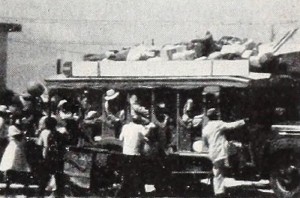
"Fifty-odd owners of small Cessna planes take off from Milwaukee in the dead of winter to pay a flying visit to the principal points of interest in Guatemala. Dr. Herman A. Heise has made a competent and consistently interesting record film of the journey, while his wife furnishes a bright, informal commentary. The capable filming is happily complemented by well-paced editing and a suitable scoring of native Guatemalan music. On occasion, however, a too matter-of-fact pictorial approach and a few over-precious details in the narrative detract slightly from the overall excellence of Caravan to Guatemala as a record film." Movie Makers, Dec. 1950, 466.
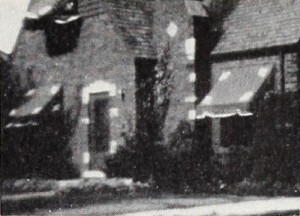
"A brief film designed as a trailer for home use rarely possesses the quality of general audience appeal. Grace Lindner may be justly proud of having achieved this elusive element in Bless This House. The film is a hymn of love, an ode in praise of home, the family, mutual understanding and other ingredients of the good life. That the theme is an emotional one is admitted. That it might have become painfully saccharine is granted. That it did not is due to the sensitive and restrained manner in which the filmer has presented her familiar scenes. Fred Waring's recording of the title song furnished the theme and is used as an integral part of the film." Movie Makers, Dec. 1950, 466.
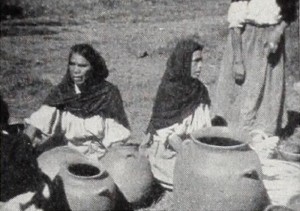
"Ella Paul did not try to cover the whole of Mexico, as do so many who visit that fascinating country. In fact she chose to limit her study to one small locale — the town of Patzcuaro and the activities on its lake. This primitive yet industrious community is recorded in pleasing compositions and with sympathetic appreciation of its sunny warmth and charm. The familiar butterfly nets, dugout canoes and the heroic statue of Morelos are all there in Beneath Mexican Skies; but Mrs. Paul's camera gives them a fresh treatment." Movie Makers, Dec. 1950, 466.
Total Pages: 299
 Amateur Cinema