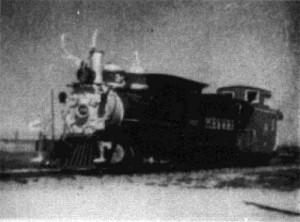
"In Narrow Gauge Kingdom Roger H. Klatt presents an ambitious and highly successful documentary study of the rapidly vanishing narrow gauge railroads of the Far West—and of Colorado in particular. Excellently photographed and edited, Narrow Gauge Kingdom gives rewarding evidence of high-caliber research carried out by a genuine railroad enthusiast. Both picture-wise and in well-delivered narrative, Mr. Klatt has delved deep into the flavor of his subject, producing a film which, despite is length, is interesting throughout and of lasting historical significance. A newcomer to the Ten Best competitions Mr. Klatt has used the medium of the motion picture with rare competence. Not only has he effectively pinned down the dramatic possibilities inherent in his subject, but he has utilized the mountain background of Colorado to fine advantage. Apparently neutral between the proponents of magnetic stripe or tape recording, Mr. Klatt has used both, skillfully putting the narration and railroading sound effects on magnetic stripe and and effectively indigenous guitar accompaniment on a separate tape!" PSA Journal, Jan. 1955, 48.
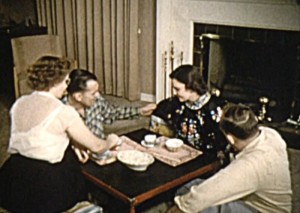
A married couple responds to a newspaper ad seeking homes for foreign delegates visiting America. The couple receives the news that their guests are coming from Hong Kong, China, and they begin to alter their home and appearances to adjust to Chinese customs. However, when the delegates arrive, they do not meet the couple's expectations.
"Film was created for the Toronto Star to recruit paper delivery employees. Film shows paper boy delivering the Toronto Star and buying a radio and bicycle with his earnings. Film was produced by Thatcher Film Productions, Toronto, Ontario, Leslie P. Thatcher. It was presented by the Toronto Star" Archives of Ontario.
"This film shows a newspaper delivery boy, Douglas Woodley, son of Charles Devenish Woodley, on his route." Library and Archives Canada.
"Item is a film of a trip to Spain taken by Dr. Willinsky, his wife, Sadie, and some of their friends. Despite its title, the film does not contain footage of France. In the form of a travelogue, footage of landmarks, the local population, and the Willinsky's activities are accompanied by music and Dr. Willinsky's commentary. Footage includes shots of the Square of Spain, Sadie walking along the streets of a shopping district, churches and monasteries, a boat cruise from Palma to Figuera, a spring festival procession and dancing in Majorca. Most of the scenes were taken in Palma and Majorca." Ontario Jewish Archives.
"A short film about movie-going punctuality" Imperial Oil - Film Collection.
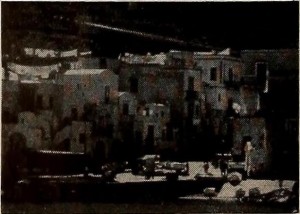
"From the Island of Capri, Helen Welsh has brought home a charming, sunny vignette in Where the Sirens Sang. It is the sort of film any traveler would like to have as a memento of a pleasant sojourn. Miss Welsh's seeing lens has captured the spirit of the countryside, its people, its luxurious beaches, its typical transportation. For this reviewer, Where the Sirens Sang plays a beckoning tune indeed." Movie Makers, Dec. 1953, 334-335.
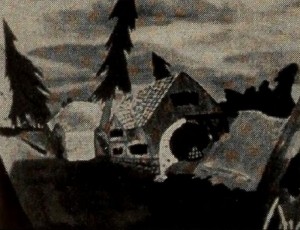
"That most difficult and painstaking of film forms known as animation also may be one of the most rewarding, especially when the result is as delightful as The Deserted Mill, by Irwin Lapointe. This film is, quite simply, a leisurely picturization of an old mill, with its placid stream and the animals, large and small, that live in and around it. Mr. Lapointe's art work is imaginative and his camera treatment of the material crisp and well paced. A stimulating musical accompaniment by Ferde Grofe complements the picture's mood and aids immeasurably in making this little film a rewarding one both to the filmer and to his future audiences — which should be legion." Movie Makers, Dec. 1953, 334.
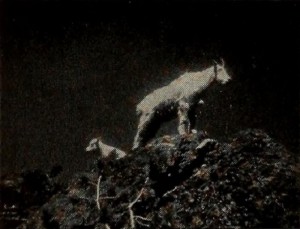
"Ralph O. Lund, whether he knows it or not, has adopted the same narrative technique used earlier in a nature film (The Gannets) whereby one of the wild creatures being pictured becomes the narrator. In Monarchs of the Mountain Tops, Mr. Lund's "Pete Smith" is an agile and bewhiskered mountain goat. His recurring comments enliven considerably the producer's study of the flora and fauna of Glacier National Park." Movie Makers, Dec. 1953, 334.
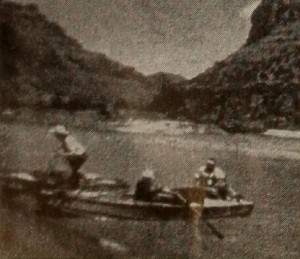
"Louise M. Fetzner is a housewife who plainly likes the thrills of running the rapids down dangerous rivers while she makes movies that really move! In Green River, Mrs. Fetzner has a well paced, well photographed and altogether literate account of the adventures which she and her companions had on the Colorado's main tributary. The film is interesting and exciting, and tells its story concisely and without padding. The accompanying narrative is written and delivered effectively, although occasionally the level of the background music rises to overwhelm the narrator's voice." Movie Makers, Dec. 1953, 344.
Total Pages: 299
 Amateur Cinema