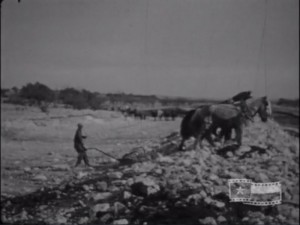
"Produced in the late 1920s, this amateur film documents the construction of the Santa Fe Railway extension connecting San Angelo and Sonora. In 1928, the Atchison, Topeka and Santa Fe Railway Company (Santa Fe) purchased the Kansas City, Mexico and Orient Railway Company of Texas (Orient of Texas). In so doing, they also acquired the company’s system of track lines, 465 miles of which were in Texas. As a subsidiary of Santa Fe, Orient of Texas then began construction on a pair of extension lines: one spanning the 72 miles from Paisano to Presidio and another the 65 miles from San Angelo to Sonora. This amateur film captures early construction on the second, with a small crew using work horses to clear the route and build bridges. The San Angelo-Sonora line was completed on July 1, 1930. Santa Fe abandoned the line in 1976" Texas Archive of the Moving Image.
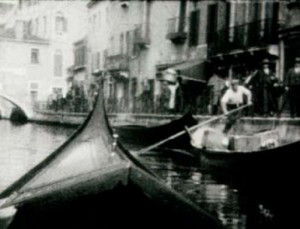
"Travelogue with intertitles of Alexander Black's trip to Europe in 1928. It includes footage of air and sea travel, a phantom ride in a gondola, and footage of Black himself feeding pigeons in Venice, Italy." UC Berkeley Library.
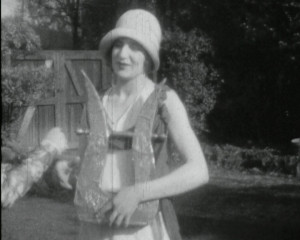
"Sally yearns for the better things in life. Her mother takes in washing and asks Sally to return some laundry. En route, Sally peers over the gate of a house. She is spotted by the owner, Mrs Bond-Regent, who has just returned from shopping for her niece's garden party to learn that her maid has left. Sally is dragooned into becoming the maid for the afternoon. The film involves Sally's mishaps. The guests, who are all women, include an artist, a musician, an actress, a dancer, a representative of The Simple Life League, and a woman dressed like a man (whom Sally mistakes for a man). Despite her shortcomings as a maid, the guests all see wonderful potential in Sally and try to teach her their respective arts, but to no avail. After being persuaded to smoke a pipe, Sally flees the party and returns home, eschewing the better thing in life" (EAFA Database).
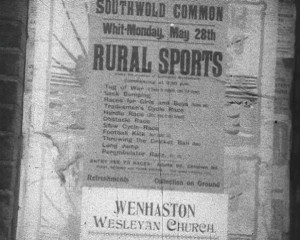
"This is a record of a rural sports day held on Southwold Common on Whit Monday, 1928. (Identified on a still of a poster.)" (EAFA Database).
"On May 28th 1928, Whit Monday, Barrett filmed the races and prize giving of the “Rural Sports”, held on the common. These sports had flourished before the First World War, and this was an attempt to revive them. Although on the film everyone seemed to be enjoying themselves, these Rural Sports were not held again. Barrett Jenkins was pleased with the results of his filming, and so continued" (Cleveland 2009, 139).
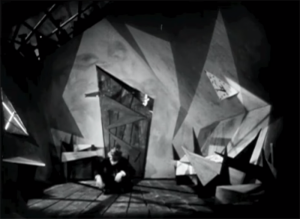
"The TellTale Heart is a 1928 American silent film directed by Charles F. Klein, based on the short story by E.A. Poe. This experimental, avant-garde film used many new techniques and influenced a series of cinematic Poe renditions in both the United States and France, including The Fall of the House of Usher by M. Webber, made in the same year. The two films have many aesthetic similarities, although the narrative in The TellTale Heart is significantly less abstract. The music underscoring the work creates a parallel drama to the events unfolding on the screen. After the title sequence, some of the text from the original short story is projected to foreshadow the gruesome events to follow. A still of the Old Man's eye is layered on the top of this scrolling text, accompanied by the first statement of the “Vulture Eye Chord”, which continues to come back as a leitmotif throughout the score. Also prominent is the leitmotif for our narrator, which takes the shape of a disturbingly quick and easily unhinged "Death Waltz". Upon strangling the Old Man for his vulture eye, the waltz quickly dissolves into a quick 5/8 section, dignifying the beating of a heart, which gradually slows. After two detectives come to investigate the scene, the narrator having initially been successful in covering up his deceit, the underscoring reveals to us that he's been tortured by his deeds as the two leitmotifs emerge from an otherwise calm texture. After hearing the beating of the Old Man's heart beneath the floorboards, the narrator admits to his sin and reveals the body at the end of the film" Center for Fiction, NY.
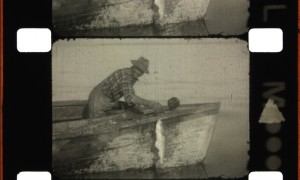
"Detailed views of fishing, with intertitles. " oldfilm.org
"Amateurs in cinematography, members of the Manchester Film Society, which was formed last year by Mr Peter Le Neve Foster, one of the founders of Cambridge Cinema Club, have almost completed its second film, “The Black Bear”, based on the story “The Fool of Chester”. Mr Foster directed the film and Miss. R. Tongue manipulated the camera. The length of the film is about 1,000 feet, and it will be presented in about one month’s time. The promoters of this enterprise are hopeful of being able to secure sufficient local bookings to cover the major part of the outlay. With the exception of making prints, the whole work of production has been undertaken by the Society, which hopes someday to be able to purchase the necessary apparatus enabling them to do even this work themselves. Nearly all the scenes were “shot” in Cheshire" (Anon 1928, 47).
Total Pages: 299
 Amateur Cinema