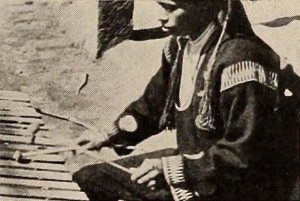
"Opening with a superb trick title in Kodachrome, Guatemalan Rainbow, by the late Ripley W. Bugbee and Robert W. Crowther, carries the audience on an ocean voyage from New York City to the mountain villages of Guatemala, where Mayan mysteries are still celebrated and where the world is a riot of indescribable color. No sequences of the leisure and pleasure of shipboard life have excelled those in this picture. Dexterously, the ritual of afternoon tea was captured with the same finish as if the scenes had been directed in a studio. Active sports and lazy afternoons are recalled in the picture with idyllic beauty. After several minutes of rather less interesting and distinguished footage, the production reaches another high in the presentation of the descendants of the Mayans, whose markets, customs and religious observances are dramatically and expertly chronicled. The whole is accompanied by a satisfactory musical setting." Movie Makers, Dec. 1938, 619.
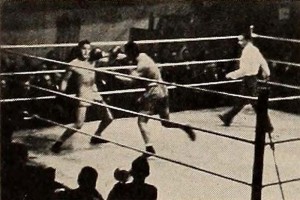
"The Glory Road is a film story of flying fists and hard punching youngsters battling their way to the top of the amateur boxing world. It records, with amazing completeness and verity, the actual ring contests of the 1938 Golden Gloves championship fights. Taking up the story at the bottom of the ladder, Dr. Clifford Decker pictures the long grind of training, the whirl of preliminary elimination fights, the trip of a local picked team to New York for the semi finals and the eventual rise of a Binghamton boy to the Eastern championship after a victory in Madison Square Garden. A sizable accomplishment, this film is more than a mere record. The producer has added imagination and has built up a significant continuity with stirring crises. Although the vast bulk of material, necessary to make the document complete, rather overbalances the film and detracts from its pure motion picture value, The Glory Road is an extraordinary picture." Movie Makers, Dec. 1938, 618-619.
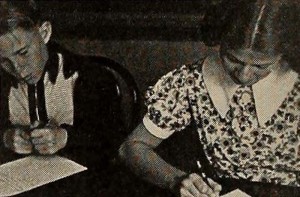
"First Film and When the Cat's Away, a double header entry, which takes honors jointly because of the strong relationship between the two, is the production of the Cinema Club of Lowell Junior High School, at Long Beach. Calif., and of the club's faculty adviser, Helen Rees Clifford. First Film, largely the work of Miss Clifford, summarizes the Junior High School group's experiences in producing When the Cat's Away, which is entirely the achievement of the youngsters. Together, the two films present a clear and concise picture of the initial production of a film by a junior high school movie club, from scenario writing and movie planning to the completed opus, ready for its premiere. So, in these two reels, one sees how the job of teaching movie making technique to youngsters, of ages from eleven to fourteen, can be handled efficiently and happily, and one learns how clear and coherent a little picture can be produced as a starter. Few high school photoplay clubs have begun so well and with so little lost motion. Very few high school first films are as clear and competent as When the Cat's Away." Movie Makers, Dec. 1938, 618.
"First Film and When the Cat's Away, a double header entry, which takes honors jointly because of the strong relationship between the two, is the production of the Cinema Club of Lowell Junior High School, at Long Beach. Calif., and of the club's faculty adviser, Helen Rees Clifford. First Film, largely the work of Miss Clifford, summarizes the Junior High School group's experiences in producing When the Cat's Away, which is entirely the achievement of the youngsters. Together, the two films present a clear and concise picture of the initial production of a film by a junior high school movie club, from scenario writing and movie planning to the completed opus, ready for its premiere. So, in these two reels, one sees how the job of teaching movie making technique to youngsters, of ages from eleven to fourteen, can be handled efficiently and happily, and one learns how clear and coherent a little picture can be produced as a starter. Few high school photoplay clubs have begun so well and with so little lost motion. Very few high school first films are as clear and competent as When the Cat's Away." Movie Makers, Dec. 1938, 618.
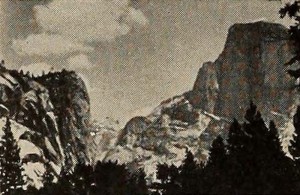
"Dr. Numa P. Dunne has accomplished in Colorful Yosemite what hundreds of other amateur movie makers have failed to accomplish — the production of a simple, well planned and charming scenic of Yosemite National Park. Here was a subject selected by scores of itinerant cameramen before him, yet "muffed" almost invariably through lack of care. Dr. Dunne found no scenic advantages in the great park not offered to others, but he obviously brought to the setting something more than the usual confused and slightly awestruck interest. Tripod steady camera work, well rounded sequences, pleasing compositions and imaginative title wordings all contribute to make up a satisfying whole." Movie Makers, 1938, 618.
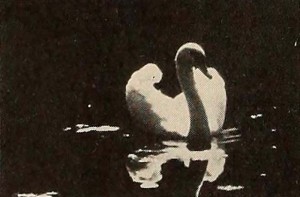
"A milestone in the pedagogy of personal movie making, How to Use Your Camera, produced by the Harmon Foundation and photographed by Kenneth F. Space of that organization's staff, is a simple and straightforward exposition of the fundamentals of camera operation. This picture, reel one in a forthcoming series of releases to be entitled You Can Make Good Movies, is marked by attractive and technically superior photography. The remarkable restraint exercised in planning and directing the picture is its outstanding virtue because, although the principles of camera manipulation covered are elementary and brief, they are crystal clear. It would have been easy to have covered too much ground in a one reel film of a technical procedure, and, in restricting the scope of the picture, the producer showed astonishing understanding of both the movie medium and of the technique of teaching movie making. The photography is beautiful, the sequencing and editing exquisite gems, in themselves examples of good technique, and the titling is excellent. Movie Makers will be impatient to see the companion reels in the series, and the Harmon Foundation deserves acclaim for its pioneering work." Movie Makers, Dec. 1938, 618.
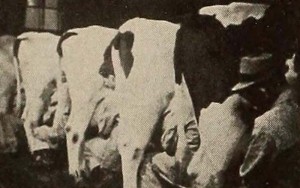
"Well known for its attainments in the commercial film field, the T. W. Willard Motion Picture Company sets a new high in its publicity productions with Follow the Plow. To technical excellence they have added sound sequencing; into a record of vocational education, they have instilled beauty and human interest. The subject matter concerns the training given to selected city boys in the fundamentals of farming at the Bowdoin Farm, operated by the Children's Aid Society of New York City. Tracing the course of these boys from the sidewalks and streets to the fields, at New Hamburg, N. Y., the location of the farm, the film expands with the glorious color of the autumn country and becomes a living essay of the pleasures of farm life. Constantly changing angles and intelligent titling lend pace to the production. Despite the limited interest in the specific subject of plows and cows, the appeal is made universal through magnificent color scenes and competent treatment." Movie Makers, Dec. 1938, 618.
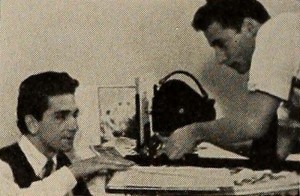
"Produced for the Besbee Products Corporation, by Charles J. Carbonaro, Entitled to Success is something new in the amateur movie industry. It represents the use of movies to advertise a movie product; in this case it is the Besbee Universal Title Maker. In this film, Mr. Carbonaro maintains his usual high standard of photographic excellence, and he has introduced a number of ingenious technical tricks. The story is a delightfully and naturally handled tale of a new movie maker who acquires a titler and sets out to investigate its possibilities with the aid of his wife and a friend who is also an amateur filmer. The fresh, contagious enthusiasm of the real movie fan is effectively portrayed by the well directed cast, and anybody who has had the experience of buying a new cine accessory will not fail to chuckle sympathetically with the hero's intense delight as the story unfolds. The picture is beautifully planned and expertly edited and, best of all, it has the little touches that grow only from sincerity of purpose and understanding of the art of the cinema." Movie Makers, Dec. 1938, 617-618.
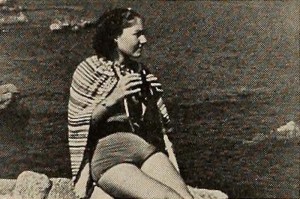
"The praises of California's beautiful scenery, so often sung, rarely have been intoned as convincingly as in West Coast, by W. W. Champion. The high standard in the selection of scenes, to be noted first in the choice of shots around lovely Monterey Bay, in itself would make this picture exceptional. Added to that quality are artistic compositions and sequencing remarkable for its unstilted continuity. As the picture's subject shifts from the harbor to the town of Monterey and then down the coast to Carmel, the historical features of this section of California are brought out clearly, while the pleasures of country club and bathing beach add human interest. Smoothly and swiftly, by means of expertly executed transitional devices and fades, the story of life unfolds against a background that is colorful and charming." Movie Makers, Dec. 1938, 617.
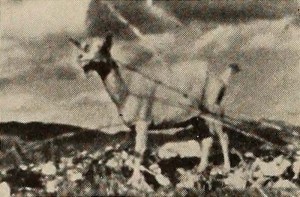
"Vida Pacoima, a two reel study of Mexican life in the southern California village of Pacoima, by Randolph B. Clardy, represents a near miracle in portraying a mood in motion pictures. Whether one likes (i.e., is entertained by) the film or not, there is no gainsaying the amazing emotional effect of its intelligent and beautiful cinematography. Here, in easy going and seemingly unstudied sequence, is the utter aimlessness of the slatternly village and its defeated people. Chickens and children, billy goats and black gowned old women, these are the life of Pacoima. Mr. Clardy has caught them all—either dreaming or drowsy in the sunshine—and presents them with a telling reiteration against the background of their broken homes and through the slats of their sagging fences. A sensuous delight, the photography is as nearly perfect as circumstances would permit, outstripped only by an unerring and often ineffable sense of motion picture continuity. In Vida Pacoima, Mr. Clardy is an artist to his finger tips and a movie maker down to the ground." Movie Makers, Dec. 1938, 617.
Total Pages: 299
 Amateur Cinema