"Donald Volkman's film, A Breath of Spring, is a montage study of the vernal season in a city — in this case, Boston. But shots of the blowing skirt of a girl, the wind-whipped awning of a department store and the clothesline ballet of the Monday wash are universal. Mr. Volkman has truly brought imagination to his pictorial progression of spring, from melting snows in a churchyard to the full flowering of the sun-warmed earth and its people. His choice of musical accompaniment is especially notable, particularly with shots of running water in gutters and the Boston Pop's rendition of The Wearing of the Green with the sequence of a St. Patrick's Day parade. A Breath of Spring was created as a thesis in a course on motion pictures at Boston University, where Mr. Volkman is a student." Movie Makers, Dec. 1951, 411.
"Leo J. Heffernan's 'What God Hath Whrought" pictures some of the wonders of Nature, with emphasis on the mighty Niagara Falls. His color photography is excellent." American Cinematographer, May 1952, 224.
"While motoring through Zion National Park, Leo J. Heffernan photographed the mountains, trees and canyons as they passed by his camera. The resulting picture, What God Hath Wrought, filmed almost entirely from his moving car, has an amazing three-dimensional effect. Changes in depth and perspective give the viewer a strong sense of participation, a true feeling that he is actually on the spot. For, traveling along the main highways, where so many tourists drive each year, Mr. Heffernan shows us this usually static subject from a tourist's level — but with new and refreshing viewpoints." Movie Makers, Dec. 1952, 341.
"Oscar Horovitz clicks with a second entry in this competition with his 'Tulips, Canals and Wooden Shoes,' documentary on native Holland." American Cinematographer, May 1952, 224.
"Leo Caloia's 'The Thing' is an ambitious effort in a storyfilm production, demostrating excellent camera work." American Cinematographer, May. 1952, 224.
"Northwoods Adventures is a plumply constructed and neatly tied half-hour package of travel through the Adirondack area. Evident in it are the well known technical skills, the smooth sequencing and the attractive titles which mark all the movies of Frank E. Gunnell. But the picture seems a package, nevertheless — and a package for a purpose. One gets the impression that the producer, as he edited, had his eye on the guest-lecturer's clock at a luncheon club meeting — rather than on the crisp continuities of movie making per se." Movie Makers, Dec. 1951, 412.
"Sometime during the summer of 1950, Fred Evans, L. A.'s genial maestro of 8mm movies, arranged to pick up a new Nash sedan in Grand Rapids, Mich. What better excuse need there be for packing up his two Southern California sons and taking them East to meet the land of their forefathers? Which is exactly what he did in Vacation Highlights of 1950. The lead title is commonplace, perhaps almost banteringly so; but the film footage which follows it is not. Niagara Falls, his native Vermont, Concord, Lexington, New York, Philadelphia and Washington are on the Evans itinerary of American history. There is a rewarding stop at the St. Louis zoo — for its incomparable Sunday shows — and soon the Evans are home again. But not without one final twist to the tale. "Hey, look-out here, Pop!" urges the oldest offspring as he returns from scouting the premises. The family cat, with inimitable feline pride and savoir faire has had kittens." Movie Makers, Dec. 1951, 410.
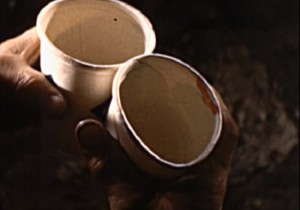
"Under the able direction of Kenneth E. Carrier, ACL, a production unit of the Grand Rapids Amateur Movie Club has produced an engrossing film drama based on a short-short story from a Billy Rose column. Two Paper Cups begins as if it would tell the familiar tale of a bored husband plotting the murder of his wife for the love of that "other woman." But a double switch at the plot's end saves the life of the married woman and, with irony but without need, takes the life of the husband. Top notch photography, expert staging and lighting, good acting and skillful editing make this photoplay an outstanding example of cooperative filming at its best." Movie Makers, Dec. 1951, 410.
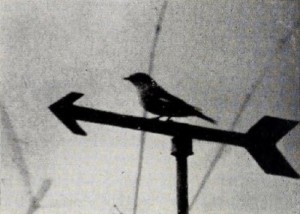
"Emma L. Seely's patience, good judgment and technical skills have made Out of Door Life in Ohio an amateur accomplishment of major importance. Her interest in her subject illuminates this well authenticated and minutely documented study of the bird life, in particular, and flora and fauna generally in her native state. Mrs. Seely's sure and expert grasp of cinematographic problems in nature filming made the successful recording of her beloved subjects possible. Finally, her able organization of the resulting footage made for a presentation at once impressive, informative and entertaining." Movie Makers, Dec. 1951, 410.
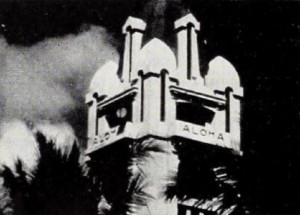
"This picture, we predict, will be both widely acclaimed and widely criticized for, in each case, that quality which people call "professional." If this prediction proves true, then the producer's purpose in making Invitation to Hawaii will have been conclusively achieved. For of the film Harold L. Thompson has written us at ACL as follows: "I made the picture largely as an experiment to see whether an amateur with sufficient enthusiasm could produce a 16mm. documentary which approached professional standards." The impression here is that on the case book of this experiment Dr. Thompson may now write: "Q.E.D." For Invitation to Hawaii has in every foot of it the polish and pace which one associates with professional standards. It was clearly planned, ably photographed and concisely edited. All in all, a brilliant piece of work." Movie Makers, Dec. 1951, 410.
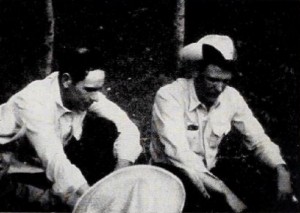
"Seventeen hundred feet of 16mm. color is a lot of footage through which to sustain audience interest. But, so help us, that is exactly what Lester F. Shaal has done in Colorado Diary, and we don't quite understand yet just how he did it. Perhaps it was the diary-entry continuity device he used, which, with the entries being made in situ on a Colorado dude ranch, permitted a refreshing infusion of flash-back sequences amid the day-to-day activities. ("The flight out here was glorious," notes the attractive diarist, and some superb air footage lends variety to the routines of the corral.) Perhaps it was the side trips from the ranch to ghost mining towns — or to Durango and the narrow-gauge railway country. Whatever the secret, Mr. Shaal has mixed it well with his usually impeccable camera work. Seldom have the vitality and majesty of the West been portrayed more movingly than in Colorado Diary." Movie Makers, Dec. 1951, 410.
Total Pages: 299
 Amateur Cinema