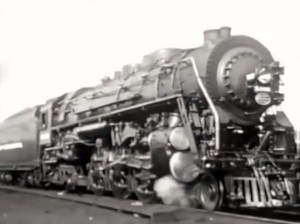
"The Steam Locomotive, second release in the Know Your Railroad series, sponsored and produced by the Motion Picture Bureau of the New York Central System, is a worthy successor in this intelligent line of educational films. In it, Frederick G. Beach, supervisor of the bureau, has set forth in clean cut cinematography the design, construction, operation and maintenance of the famous Hudson type locomotive. An animated model of a steam cylinder explains the otherwise hidden functions of this key piece of machinery, while a soundly conceived narrative points up the film's visual teaching throughout. A stirring sequence showing these great coal eating giants at their daily tasks brings the picture to a dramatic close." Movie Makers, Dec. 1944, 495.
"Working with the difficult subject of machinery in motion and under actual factory conditions. Bay State Film Productions, Inc., succeeded, with remarkable effectiveness, in producing a film of such simple clarity and orderly progression as to make it an excellent teaching medium. The picture, designed and executed to acquaint a company's salesmen with the background production steps to the things they sell, is lacking in none of the essential details that go to make it effective. The story is told by a general foundry superintendent in an easy, pleasing manner. Although of highly technical subject matter, the film arouses interest in average audiences as well as in the individuals handling the products made within Building 100 of the Chapman Valve Company of Indian Orchard, Mass., who commissioned the picture." Movie Makers, Dec. 1944, 495.
"Warren S. Doremus has evinced fresh imagination in The Call of the Lonely Wood, a dramatic story of a venture into the unknown by a young man who has only a sketchy map to guide him. He fails of his goal on the first attempt, but he sets out once more after recovery from exposure and exhaustion. The hurdles he overcomes and the excitement of his discovery of each of the three triangles that serve as clews are convincingly pictured and supplemented by a well written narrative that is dramatically presented. Interesting dissolve effects support the mysterious quality of the film's theme, and suspense is maintained by excellent cutting and editing. A well rounded musical score was arranged by Arthur Brown, and Robert Carabell played the main role with competence." Movie Makers, Dec. 1944, 494-495.
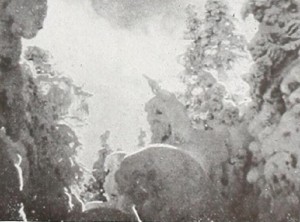
"Robert P. Kehoe accepted a strong challenge and secured a fine result in filming Snow on the Mountains. Filming so static a subject as snow forms, iced trees and wind storms on a mountain presents a real task of vitalizing the material. Mr. Kehoe has brought weird and beautiful life to the screen. This film, excellently scored to present the musical message suggested by the snow scenes, builds from the pleasantness of subdued ice and snow forms, through the almost animate figures created by winter on trees and bushes, to a breath taking climax of a snow storm on the mountain. Culminating the beautifully edited and intelligently filmed footage is an inspiring sequence of flaming powdered snow, reflecting the full crimson of the sunset. So remarkable is this action that the impression imparted is almost one of a cascade of liquid fire flowing across the screen. In order to secure many of the scenes, Mr. Kehoe stood so long in the snow that it was necessary actually to lift him into a motor car and to remove the cine equipment from his chilled hands at the end of his task." Movie Makers, Dec. 1944, 494.
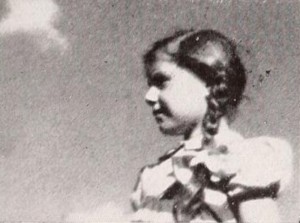
"These Third Avenue kids, see, are playing hide and seek around the front stoops and dark doorways of their native block, when one of them — a little girl — huddles thoughtlessly into the back seat of a parked and beckoning car. Her adventures, when the car is then driven off by a gay young pair of picnickers, comprise the story of Kid-Napped! by Victor Ancona. It is a dramatic story, full of suspense and impending tragedy, but it is one, happily, which refuses ever to take itself too seriously. The young man and his lady pass a bright day in the country with their sandwiches, soda pop and jazz music on a portable radio. The little girl — whom chance dictates shall not be discovered by the picnickers until near the film's end — wanders in happy wonder from flower to fern, from bird song to lakeside. These parallel themes — interspersed with occasional dramatic flashes of a frantic mother — are developed by Mr. Ancona in a suave combination of imaginative camera viewpoints, striking manipulation of outdoor lighting and competent cutting. An 8mm. production, Kid-Napped! eschews, with brilliant selectivity, the unsatisfactory long shot, to present the medium at its best." Movie Makers, Dec. 1944, 494.
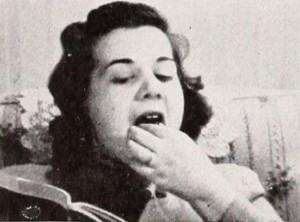
"In Glamour vs. Calories, C. J. Carbonaro has again turned to light comedy with a story of a wife who suspects her husband's infidelity because of her mounting avoirdupois. Excellent directorial touches are found in the scenes that would tend to corroborate her misgivings, especially in those of the gossip mongers. Many fine closeups that "plant" the suspicions contribute to the gaiety of the film, such as when the wife stoops to pick up some papers her husband has unsuspectingly dropped, only to have the seam of her dress rip from the strain. The film has interesting camera viewpoints and intelligent use of dissolves and double exposure to point up the plot. A word must be said for Mrs. Carbonaro's fine work as assistant cameraman, made necessary by the fact that her husband played one of the major roles in addition to being producer of the film, and for the high key titles with their amusing sketches. And we might add a salute to the good sportsmanship of the girl who played Mrs. Tubby, who finds a happy ending." Movie Makers, Dec. 1944, 494.
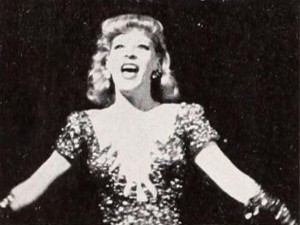
"Oscar H. Horovitz had, obviously, a certain amount of influence aiding his production of Follow the Girls, a motion picture study of the Gertrude Niesen musical comedy. This fact, however, does not explain the secret of his success. Others before him have had influence behind their filming of such dramatic spectacles as the circus, indoor ice carnivals, pageants and assorted stage shows. The influence did not help; their filming remained but a record, immobile and inanimate between the confines of a proscenium arch. Not so in Follow the Girls! Although executed with brilliant technical ability, the paramount triumph of this picture is its prevailing and sure sense of genuine cinematics. The cameraman seems to have been everywhere — on stage and off. Scenes of an ensemble or of a single singer cut in complete confidence from long shot to medium to closeup, without missing so much as a shoe tap. Follow the Girls, besides being lively and colorful entertainment, should serve as a model for all future personal movies of its kind and as an important record of this era of entertainment." Movie Makers, Dec. 1944, 477, 494.
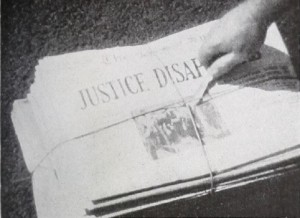
"The 1944 Hiram Percy Maxim Memorial Award film, In His Own Judgement, is the distinguished expression of the mature thought of a generous, broad and rich mind. With all the individualism of Henry Thoreau, whose philosophy the picture exemplifies, Joseph J. Harley has lifted up his eyes unto the hills and to the lonely places of nature and has brought from them a finely sincere, dramatic story that declares his own credo of man's healing.The tale is simple. A jurist, on the verge of a nervous collapse, disappears and finds refuge from terror and confusion in a lonely wooded retreat. Almost identified, after some years, by two young girls who meet him by chance, he tells them the tale of "a missing judge" in retrospective sequences. Although nearly convinced that he is the long sought man, they decline to earn the reward offered for news of him and leave him in peace. In cinematography, direction, action, dramatic construction and realization of beauty, Mr. Harley's film is of high quality. The tense horror of the overworked jurist in the crowded city is followed by the rest which he finds in solitude. The words of the Psalms comfort him and bring him "peace at the last." They are exquisitely read in a special recording. Mr. Harley was greatly aided in his two long years of labor on the picture by the fine and sincere work of his brother in law, Charles Hooker, who assumed the role of the judge with authority and restraint. The whole film is beautifully integrated by phonograph with the music of Dvorak's violoncello concerto in B minor, Liszt's Les Preludes, Goldmark's Rustic Wedding Symphony, Brahms's Tragic Symphony, Sibelius's Karelia Suite and one of the Slavonic dances of Dvorak. These provide the sole musical contribution. Mr. Harley, an engineering executive for a large corporation, has put into this remarkable film a breadth of culture acquired in two continents, the authority of a man who has looked at life and has come to conclusions about it and the creative fire and disciplined achievement of a real artist." Movie Makers, Dec. 1944, 476-477.
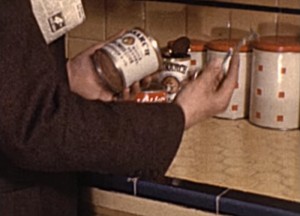
A man is angered when he returns home after work and finds that his wife is absent. He goes for a walk and imagines possible reasons for her absence. When he returns from his walk, he finds his wife in an alarming condition.
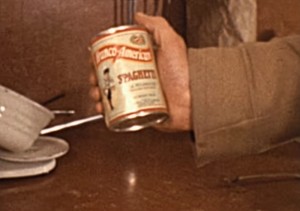
A man writes a note to inform his wife that he is leaving her. He then goes for a walk, seemingly with grave thoughts on his mind. He encounters sights which inspire him to return home, where he finds his wife in an alarming condition.
Total Pages: 299
 Amateur Cinema