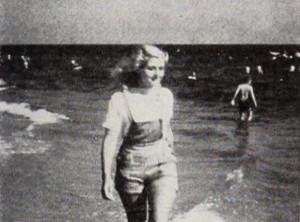
"Sunstruck, by George Mesaros, is a bright genre study of the American beach scene at its colorful, everyday best. There are the sun bathers and the sand babies, the athletes and the antics, and, above all else, the incomparably lithesome and lovely American girl. Mr. Mesaros has caught them all. in sparkling cinematography and with a pleasing selection of camera viewpoints. He has added to these a brace of brief and farcical skits which are well played and well directed. Sprightly music, shrewdly keyed to the varied sequences, rounds out the film's effect. Sunstruck, as suggested in its own foreword, is "gay, glamorous and often goofy."" Movie Makers, Dec. 1944, 496.
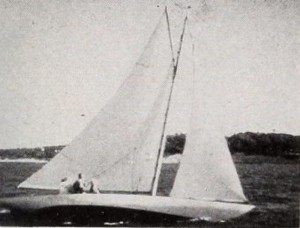
"In Reflections, Henry E. Hird has followed the intelligent practice of revising footage shot when film was more plentiful, with the result that he has created a new and interesting synthesis by editing. On a winter evening, a man reflects on the joys and adventures of a past summer. Of an athletic disposition, he has swum, sailed and hunted. Interested in wild life, he has observed and filmed birds. From time to time, he adjusts a radio, to find music that expresses the moods of his reverie. Finally, he turns off the radio, the musical accompaniment ceases and the film ends in silence. With excellent cinematography and with a nice editorial sense, Mr. Hird has gathered interesting events into an entertaining whole." Movie Makers, Dec. 1944, 496.
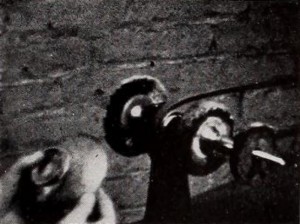
"Helen H. Loeffler has the distinction of being the only woman among those whose films placed in this year's Ten Best selection. Permanent Color is a workmanlike film record of applying vitreous enamel to metal in the production of decorative objects. The movie is replete with well lighted closeups of each operation, from making the vessels of copper to the final polishing after the enamel has been baked. Explanatory titles of the various steps are well handled, and scenes of the finished products provide a colorful ending." Movie Makers, Dec. 1944, 496.
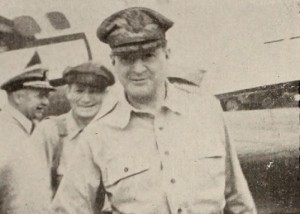
"When Lewis B. Sebring. jr., went from the United States early in 1942. as a war correspondent accredited to General Douglas MacArthur's headquarters, he wisely left his camera at home. There was no telling what dangers and difficulties lay ahead. Months later, after the Japanese had been driven back across the Owen Stanley Mountains, after the battles of Buna, Salamaua and others, there seemed to be more time and opportunity for personal movie making. Happily, Mr. Sebring managed to borrow a good 16mm. camera, and New Guinea Newsreel is one of the exciting results. Keyed by the expert titles of a news writer, it presents a series of well rounded sequences on such colorful subjects as a visit by General MacArthur; a cine interview with Major Richard I. Bong, top American air ace of the war to date; an informal exhibition of Japanese souvenirs, and a moving Easter service, somber against the gray dawn of a New Guinea foreshore." Movie Makers, Dec. 1944, 496.
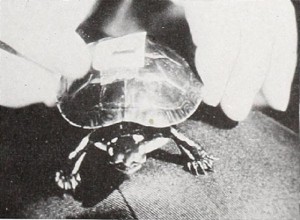
"Frank E. Gunnell has used a novel continuity motif in Mohawk Pals that ties together what otherwise would be a rambling film story. Two boys are shown doing their "homework," and the final assignment is to write a composition on vacations. The film then pictures the summer adventures at Lake Mohawk of the two boys and a girl of similar age. From time to time, there are inserted shots of the boys writing, and sentences from their compositions are cleverly double exposed at the bottom of the frame, to serve as subtitles for the film. The cinematography is immaculate, and the youngsters appear without self consciousness in their various pursuits of fun on a summer vacation." Movie Makers, Dec. 1944, 496.
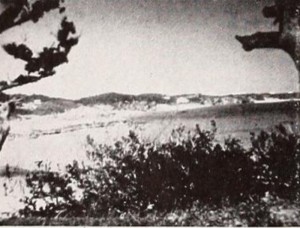
"W. R. C. Corson, close friend of the late Hiram Percy Maxim, FACL, Founder of the Amateur Cinema League, and for several years an invalid, demonstrates his loyalty to the cause of personal filming and his determination to achieve in that field by a revision of travel footage made in a more active period. As its name might indicate. Elysium is a remembrance of happier days, containing sequences chosen for their beauty or evocation of delightful times, and haphazardly geographical. Scenes filmed from the air are interspersed with records of faraway places as Mr. and Mrs. Corson are seen wandering here and there. Here is the gallant and intrepid accomplishment of a pioneer movie maker who is still "in the game."" Movie Makers, Dec. 1944. 496.
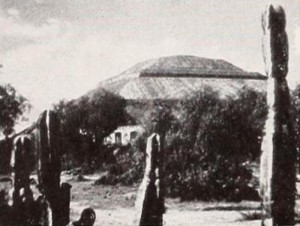
"Down Mexico Way, by Lester F. Shaal. is a pleasing combination of travel, education and simple, stirring beauty. Beginning at the Providence (R. I.) railway station (the producer's home city), the film takes us swiftly by train to Mexico, D. F., the country's capital. After a tour of that metropolis, one visits in turn such popular tourist meccas as Xochimilco, San Juan Teotihuacan, Cuernavaca, Toluca, Taxco and others. An attractive map of Mexico, in color, introduces these several journeys and makes clear the geographical relations of the different towns. Mr. Shaal's camera work is tripod steady throughout, his compositions are pleasing and his musical scoring is an effective supplement. Of outstanding beauty are his sequences on golden, sunny Taxco and of the ancient, so often cloud shrouded, twin volcanos." Movie Makers, Dec. 1944, 495-496.
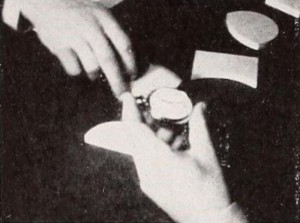
"In order to acquaint medical students with actual mental types observed in basic years of study, Jon B. Goldsborough has made Clinical Types of Mental Deficiencies. The film is not planned as an exhaustive study of types, but rather as a way to direct attention to symptoms and expressions in mental cases by showing specific examples of the diseases studied. The picture proceeds in an intelligent, orderly fashion, by bringing each definite type to the screen preceded by a simplified case history and the name of the specific disease. The film is marked by precision, clarity and intelligent planning and editing. Mr. Goldsborough has accomplished admirably his purpose of making a direct teaching aid, to be used in conjunction with extended commentary and lecture in the field of psychology and psychiatry." Movie Makers, Dec. 1944, 495.
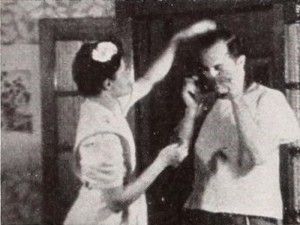
"Werner Henze has shown in Bohemian Baloney that artists can make fun of themselves and their profession. An artist and his wife had planned to have a quiet evening at the movies when a telephone call warns of a visit by a wealthy prospective buyer of pictures and her meek husband. How the young couple suddenly transform their own characters and their tasteful and immaculate living room into a scene of "arty" surroundings is gaily depicted with just the right amount of farce. The compositions and lighting are excellent and there are gay, unexpected twists throughout, particularly when a self portrait of the artist comes to life." Movie Makers, Dec. 1944, 495.
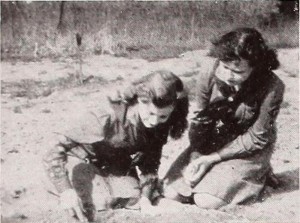
"In As Ye Sow, Walter Bergmann has made a record of a Victory garden around the plot of the conscientious worker as contrasted to the indolent one. Mr. Shirker in his wishful thinking, through a dream sequence, takes the local prize for vegetables before the digging even begins. As the season progresses, Mr. Worker grows a fine garden, while his opponent achieves a harvest of weeds in spite of his bribes to helpers to produce his garden for him while he goes fishing. The players are well chosen and directed, and there is an amusing and well acted climax in which Mr. Shirker gets his inevitable just deserts." Movie Makers, Dec. 1944, 495.
Total Pages: 299
 Amateur Cinema