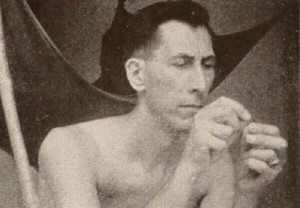
"It is generally accepted by the less moronic elements that Hollywood's version of life in the army not only missed the point but overlooked it completely. Reginald McMahon, a hardy private first class during the war, has compensated greatly for Hollywood's sins in his Sweating It Out, a clever film recording the period between V-J day and his return from overseas. Mr. McMahon was with the 24th Combat Mapping Squadron, stationed at Gushkara, India. He was in a position to show what a hot, boring climate does to military stiffness and the blithe American temperament; and he has done so. Barracks life becomes very real in his hands, with its essential lack of glamour, its endless small detail and its everlasting poker games. The negative aspects of army life at an outpost — K.P. and guard duty — come in for their proper share of bitter comment. Mr. McMahon is to be thanked for recording the trivia that make up army life in a way that makes one almost nostalgic for them." Movie Makers, Dec. 1946, 488-489.
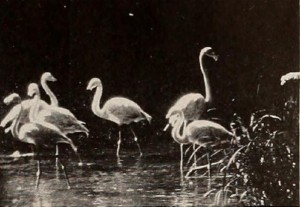
"By a clever editorial feat, Charles H. Benjamin has transformed a series of animal scenes which he filmed at New York City's Bronx Zoo into a pseudo travelog of the African game belt. He achieved this effect by simply cutting shots of heavily wooded streams into footage of the uncaged animals in the famous zoo, and the illusion is pointed up by some striking title frames. Mr. Benjamin's camera work matches his editorial insight, for his exposures and composition are first rate. His use of back lighting gives his shots of flamingoes and drowsing lions a brilliance that puts them far above the usual run of animal pictures." Movie Makers, Dec. 1946, 488.
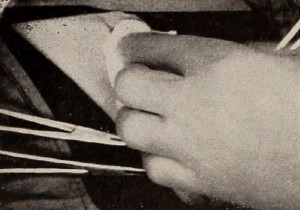
"Extreme clarity and freedom from the shadows frequently encountered in medical films mark the technical details of the surgery shown in Dr. Vincent Vermooten's Repair of an Indirect Inguinal Hernia. Dr. Vermooten was, from the beginning, acutely conscious of the problems involved in bringing the proper light sources to bear upon a complex operation in which every bit of motion possesses great significance. To make certain of a steady and complete lighting scheme, he constructed a special platform above the operating table. Floodlights, closely bunched about the platform, left no possibility of inadequately lighted areas. The result is a record of an operation, masterfully pointed up by lighting, which should prove invaluable for instructional purposes." Movie Makers, Dec. 1946, 488.
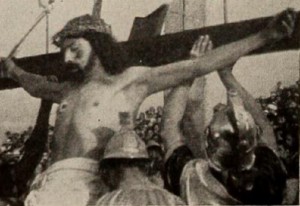
"It is a platitude that there is more in Mexico than meets the eye. In Quaint Old Mexico, however, Guy Nelli proves that there is far more in Mexico than usually meets the camera. Mr. Nelli presents the gradual awakening of Mexico, as the farmers drive their produce to market, with a startling sense of early morning atmosphere; market scenes are developed lucidly and effectively. The high peak of the film is reached with a most remarkable sequence of religious festival shots, as virtually an entire village re-enacts the Stations of the Cross. The intense religious emotion evident in these scenes has rarely been caught for the screen. Mr. Nelli's film is outstanding for its fresh approach and, above all, for the natural and casual quality of its shots." Movie Makers, Dec. 1946, 488.
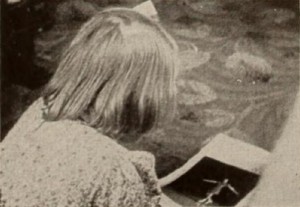
"Victor E. Pye, using his family as the principal actors in a sincere and competent photoplay, brings us the flavor of family life in far away Australia. With a sure cinematic sense, he opens Inspiration with a moving dolly sequence which carries you into the house directly to the star of the film. With creditable economy of footage and compelling acting and directing, Mr. Pye tells a simple tale of a once crippled child returned to health through the inspiration of a famous figure skater — herself a former "polio" victim. There are also several scenes from which it becomes obvious that the movie maker has profited from viewing theatrical productions with his mind on his own filming. Suave and sensitive, Inspiration becomes moving and believable as the plot unfolds." Movie Makers, Dec. 1946, 488.
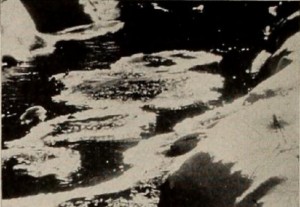
"Joseph J. Harley, filmer of nature in her many moods and an understanding lover of great music, brings a subtle and beautiful study of ice, snow and wintry waters, which is presented with the recorded music of On the Shores of Sorrento, by Richard Strauss. Here was a problem of finding music that would meet the mood of the footage and of then so editing the latter that the climaxes, both musical and pictorial, would integrate. Although, of course, Sorrento lacks the ice and snow of Mr. Harley's film, yet Strauss's tone poem coalesces amazingly with the sparkling Kodachrome of winter which has been joined to it. Mr. Harley has elected to do something that, had it been done a quarter century ago, would have made cinematic history. In doing it, he has matched the best of the past and has added a new brilliance from his own abundant creative imagination." Movie Makers, Dec. 1946, 488.
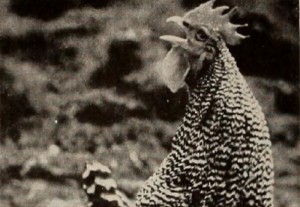
"There is an easy, effortless quality about Backyard Horizons, by Roy C. Wilcox, which tends to belie the fine competence of its work with telephoto lenses and extension tubes. The birds, bugs, bees and rabbits which parade across the horizon of the Wilcox pastures seem to be friends of the family — and they are treated as such in the unpretentious narrative which accompanies them. The sound on film track, combining simple musical selections and a restrained volume of comment, was itself produced by Mr. Wilcox, and it records his own voice, pleasingly." Movie Makers, Dec. 1946, 486, 488.
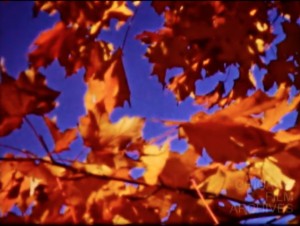
"John R. Kibar has taken the subject of recording the hues of a fall countryside and has lifted it above the familiar medley of garish color. With an interesting variety of viewpoints and an artist's eye for compositions, he has achieved the flowing, rhythmic mood of nature in her most popular season for color filmers. Particularly in shots of trees reflected in streams and the sprightly dancing of golden leaves in the wind has Mr. Kibar surpassed the usual run of nature studies. Autumn Glory is replete with movement, but closeups of a colorful branch of berries or stocks of thistle against the sky serve as punctuation for the longer sequences. A human touch is added by including an artist in occasional shots, as he sketches the scenes shown in the major part of the film." Movie Makers, Dec. 1946, 486.
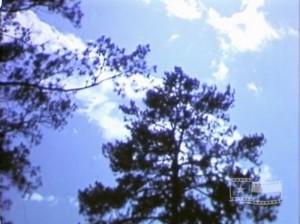
"The Texas Forest Service was faced with a grave problem. Large parts of Texas were being devastated and deforested by numerous fires. The fires were caused by the idle fancy and carelessness of backwoodsmen. Which He Hath Planted was produced for the Service by Larry J. Fisher, ACL, as part of the campaign to lead these woodsmen into more constructive paths. It is a striking example of how, with imagination, a motion picture can be constructed to fit the needs of a very special situation. Mr. Fisher and the Forest Service had to find a common ground on which to base their appeal against the pyromaniacal instinct. Realizing that, however uneducated, most people from the backwoods have both acquaintance with and veneration for the Bible, they decided to peg their entire film on quotations from the Scriptures. What they have produced is a beautiful welding of applicable Biblical passages, both spoken and sung, to forest scenes, the end result tending to promote the idea that trees are rich and wondrous manifestations of God and are not intended by Him to be destroyed by man's casual whim. The lesson is well taught. But the film imparts a sense of beauty and reverence that far outlives the immediate lesson. For that, Mr. Fisher's blending of music and word and image is responsible." Movie Makers, Dec. 1946, 486.
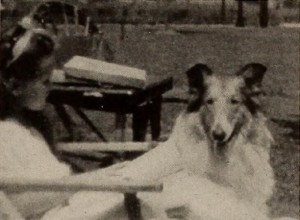
"In a relatively short period of filming, Raymond J. Berger has mastered a type of photoplay which a great many persons have expressed a desire to make, the story film featuring a child and a pet. His script, a simple and unpretentious recounting of how an invalid child wills herself to walk again, to go to the aid of her injured dog, proves an ideal vehicle for Mr. Berger's young daughter and her handsome collie, Lassie. This 8mm. Kodachrome picture, scored with re-recorded music, is noteworthy for its excellent framing and splendid closeups. Particularly engaging is the sequence, after the accident, showing the mutual recovery of the two stars. Young Miss Berger, considering the limited histrionic ability of a natural child, plays her role with grace and assurance; her crying scenes and the ingenuous frolics with Lassie are unusually credible and well performed. Mr. Berger deserves credit for his planning and fulfillment of a screen play that revolves around two such charming personalities." Movie Makers, Dec. 1946, 486.
Total Pages: 299
 Amateur Cinema