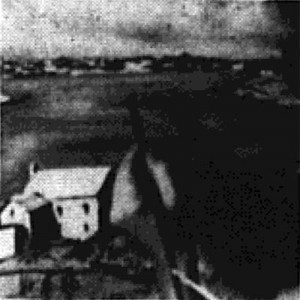
""That Which Makes the Picture" introduces its audience to the art of painting. Using a charming New England harbor scene, the viewer is shown the beginning sketches, the application of the basic colors, and the finishing touches to completion. After viewing the film, one has a greater appreciation for the care and attention to detail required of the artist working in oil paints" PSA Journal, Oct. 1963, 41.
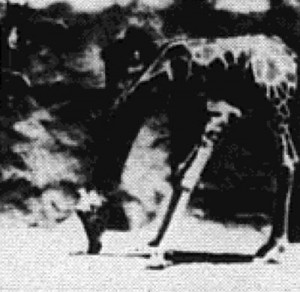
"As part of the general program of heart research, studies are being made to determine how the body's blood pressure can compensate for sudden and extreme differences in elevation. At the San Diego Zoo, the long-necked animals - the giraffe, the horse and the llama - are used in this research project. By surgical procedure, devices are inserted in the animal's body which measure and record the external actions and the internal natural control mechanism of the heart. The information compiled from these studies will aid greatly in man's effort to understand the complexities of the body" PSA Journal, Oct. 1963, 41.
"The Island of Rhodes lies in the Agean Sea off the coast of Greece. Its barren, rocky terrain is home to the strong and hard working people, who have weathered the centuries with little change, in spite of the historical remnants of past invaders. They lead a hard, simple and religious life, but when an occasion arises, all join in the festivities of the celebration, roasting whole lambs over charcoal pits and preparing the delicacies for the general feast. The contrast is stark as a great modern ocean liner glides out of the ancient harbor that once was guarded by one of the Seven Wonders of the World - the Colossus of Rhodes" PSA Journal, Oct. 1963, 40.
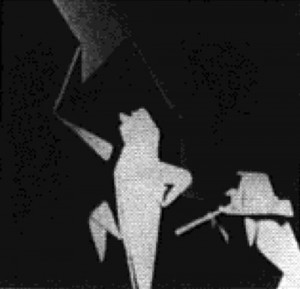
"Many forms of art originated in old Japan. Here is a demonstration of a unique and improbably one that began as entertainment for children. Origami, the art of paper folding, is charmingly portrayed and described in this very imaginative film. One of the Ten Best, it will be enjoyed in the 1963 Top of the Ten pack" PSA Journal, Oct. 1963, 40.
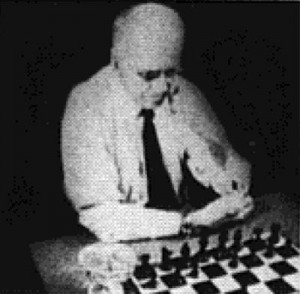
"The grace and beauty attained with advancing years is captured in this charming story, told with gentle wit and warm affection. Through the years, father has learned the wisdom of a slight deception to forestall a possible storm when he fails to follow orders, so is, instead, rewarded by his grateful wife. A memory-evoking addition to the family album of motion pictures" PSA Journal, Oct. 1963, 40.
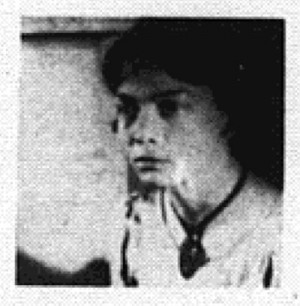
"It is a late fall day, blustery and bleak, just before the first snow. The visit by the Angel of Death is heralded by the blowing leaves and the lonesome cry of the starlings. Dramatic camera work and original music scoring create the suspense and drama of this story in a setting of an old New England state in the early 1900s. This highly imaginative film by John Riley was awarded the MPD Student film Award" PSA Journal, Oct. 1963, 41.
"A boy and his dog - the love, companionship and understanding between these two develop a deep bond. When the bond is broken, it is as though a part of life is gone. The fruitless search, the unanswered prayers take the spark out of a lively little boy. Even an appealing puppy substitute does not fill the gap for him, but does compensate a heartbroken little girl who has to give up the dog she has "found" and returned to his delight master" PSA Journal, Oct. 1963, 39.
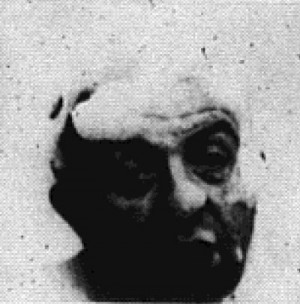
"Everyone knows a woman's penchant for a bargain, and this time it is father's favorite shaving soap - in quantity. Storage is a problem, but to a good housewife this can soon be solved. The trouble is, she fails to tell father. Still sleepy after his vigorous morning "one-two-threes," he quickly and incautiously, opens the "storage chest." When several cans of pressurized soap go tumbling against the hard surfaces of the bathroom fixtures, disastrous, and hilarious, things can happen" PSA Journal, Oct. 1963, 40.
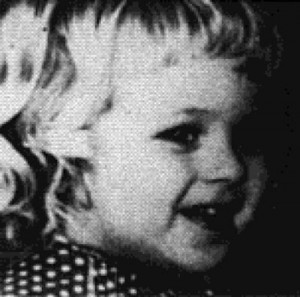
"Once again the Lawlers permit us an intimate glimpse into the lives of their family. Number 10 (boy or girl?) has joined the family and introduces all the brothers and sisters, who, in turn, tell us of their personal doings. The time has come for Number 10 to undergo the ritual of his first haircut. The whole family participates, and each child vividly recalls his or her own experience of the "first haircut." Mother's tears fall as the curls fall, but all is cheerfully forgotten as their beautiful "girl" emerges from the barber's apron a handsome boy. All narration, in each child's voice, is in rhyme, and the charm of the children is heard as well as seen, making this a truly outstanding family film" PSA Journal, Oct. 1963, 40.
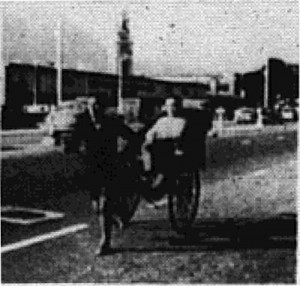
"The Hong Kong of today is still one of the most beautiful cities in the world, but under fer facade of sparkling beauty lies poverty, disease, and hunger. Crowded to the point of bursting, housing, sanitation and food cannot keep pace with the stream of humanity pouring into the city. Beautifully photographed, we see the people living their daily lives in make-shift shelters, on sampans, on top of buildings and on every square foot of available space. You can see the hunger and fear in their eyes, yet there is smiling acceptance, with hope for the future. The narrator's voice is full of compassion, yet recognizes the dignity of these work-worn, deprived people. Seeing the children, in their happy innocence and lack of concern for a desperate situation, "Hong Kong can break your heart!" PSA Journal, Oct. 1963, 40.
Total Pages: 299
 Amateur Cinema