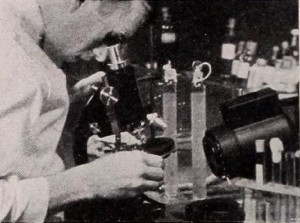
"An achieved simplicity in presenting a complex idea is the outstanding accomplishment that wins for the National Oil Products Company an honorable mention for its film. This picture presents the necessity for Vitamin "D" in the food of children and gives the highlights of preparing the Nopco product containing this essential food element. This picture, directed by Ralph Wechsler and photographed by Arnold M. Hill, ACL, follows the safely conventional presentation of industrial film messages in its continuity methods, its use of animated diagrams and its description of ultimate consumer usage. Working within this pattern, the makers of the picture have done extraordinarily well whatever they attempted. The continuity flows so smoothly as to be unperceived unless by a critically inclined observer; the animated diagrams are clear, well executed and strictly limited to the bare necessities of making the idea entirely evident; the photography is unexceptionable in nearly one hundred per cent of the film. This product of the joint efforts of an intelligent director, a very capable cinematographer and a fully cooperating industrial concern shows how perfect a practical film may be if real care is devoted to its making." Movie Makers, Dec. 1933, 522-523.
"Among the films awarded honorable mention is Remote Control, by Louis W. Bleser, ACL, which gives a fine cinematic exposition of the activities of a train despatcher, by means of an unusually well equipped miniature railway system. Here the technical problem is especially important, calling for closeup studies of the first quality, the aim being so to light and photograph the subject that there would be a semblance of realism. In effecting this result, the use of well chosen titles and fine editing played no small part. Such a film as this upholds the maxim that "cinematics begin at home." " Movie Makers, Dec. 1933, 522.
"Design, by Walter Mills, ACL, is an expository film study on 8mm. and shows to fine advantages the possibilities of this medium for serious cinematic undertakings. In this 200 foot reel, the story of a day at the Kendall Art School, in Grand Rapids, Mich., has been told coherently and instructively. The picture represents real skill in planning, selection of viewpoint and photography. Naturally, most of the sequences in the film called for interior shots and the maker is to be commended highly for his lighting arrangements, which give perfectly normal effects in the film without the usual glare and unevenness. Angle shots and unusual camera positions are used with restraint but with most happy results when the situation calls for them. The technical quality is of uniform excellence and the cutting is done with particular care." Movie Makers, Dec. 1933, 522.
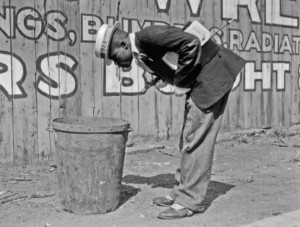
"Mr. Motorboat's Last Stand, written and produced by John A. Flory, who was assisted in photography by Theodore Huff, ACL, carries the subtitle, A Comedy of the Depression. It has, however, nothing in common with the typical motion picture comedy but is, instead, one of the very few films made each year that represent an intelligent attempt at experimentation with the motion picture medium. It is a story of Mr. Motorboat, an unemployed negro, who lives as elegantly as circumstances will permit in an automobile dump and who sells carefully washed and polished apples on a street corner. The picture turns into fantasy as Mr. Motorboat appears to ride to work in the morning in one of the cars of the dump that stands motionless without its wheels. Then the fantasy becomes more complete when he makes a bit of money and uses it as bait with which to fish in Wall Street. This he does literally and actually and with marvelous results until the crash of 1929. Simultaneously with the explosion of the prosperity bubble, Mr. Motorboat's competitor smashes his apple stand and the picture ends in a magnificent chase sequence, Mr. Motorboat after the competitor. This picture is photographed superbly well, and the editing is as smooth as that of the professional studio product. It is filled with remarkable directorial touches and cinematic symbolism and, although it suffers to some extent from the haphazard admixture of fantasy and realism, it is decidedly the best experimental film of the year." Movie Makers, Dec. 1933, 522.
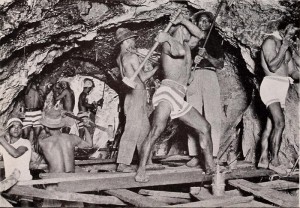
"An outstanding example of industrial record filming is Mining Chrome Ore in New Caledonia, by Enoch Perkins, ACL. Probably no amateur film ever was made under more unfavorable conditions and with as little opportunity to secure special equipment to meet them. Yet the photographic quality of this film is very high and it stands as a tribute to Mr. Perkins's ability to overcome obstacles. A large part of the picture was made in a mine where the atmosphere was so charged with moisture that it was necessary to stop and wipe the lens dry every few minutes. Although lighting was a tremendous task and often cables over a thousand feet long were required, the mine scenes are accurately exposed and well photographed. The picture gives a complete record of mining ore from the solid wall of the tunnels to the loaded freighter. It was filmed from an engineer's point of view and for the specific purpose of record; however, smooth continuity and editing maintain audience interest." Movie Makers, Dec. 1933, 500, 522.
"Telemark, filmed in the Swiss Alps by William G. McKelvy, ACL, is, as its name suggests, a skiing picture. However, it is more than that — it is also a very delightful and neatly plotted comedy that is the more convincing for being uncomplicated with the usual subsidiary plot and counter plot. Four or five youths who are expert skiers, one who is a novice, and a girl are at the beginning of a down mountain ski trail. The girl offers a kiss to the boy who can catch her. She tarts off, the able skiers follow hard on her trail, while the beginner stumbles and lags far behind. But the girl decides to trick her pursuers and hides on the way. The ending is obvious. The picture was exquisitely planned and sequenced for, as the camera follows the skiers down the mountain, there is complete smoothness in the shift of viewpoints. The action is made the occasion of splendid studies, as the boys on the run swerve and turn in stems, Christianias and Telemarks. Mr. McKelvy did not neglect to select charming compositions and to take full advantage of clear air and the contrast between the dark figures and trees and the white snow." Movie Makers, Dec. 1933, 500.
"In view of the increasing use of substandard motion pictures for practical purposes by scientific and professional men and women, it is to be expected that among the ten best would appear a surgical film. Philip A. O'Connor, of Rochester, N. Y., filmed A Reparative Operation for a Congenital Defect, which was performed by Dr. William L. Wolfson, of Brooklyn, N. Y., and this film is included by Movie Makers in this annual listing because of two chief reasons. This very delicate operation required a large degree of manipulation by the surgeon, without the use of instruments, which adds to the danger of the operator's obscuring the field of vision and, consequently, to the difficulty of securing a clear motion picture record of his work. In spite of this handicap, the admirable cooperative effort between surgeon and photographer enabled Mr. O'Connor to present an exceptionally visible study of Dr. Wolfson's technique. In the second place, the film gave a complete record of the entire operation, from start to finish, including the preliminary anesthesia. Whatever hazards may have existed photographically were so easily hurdled by Mr. O'Connor that the person viewing the film is almost unconscious of the fact that it is a film. Needless to say, the technical photographic details of exposure, focus and lighting were of the highest order." Movie Makers, Dec. 1933, 500.
"Glimpses of Rural Hungary was the first film ever made by Elizabeth Rearick but its excellence must be credited to more than beginner's luck. It represents a willingness to follow instructions carefully and an ability to compose scenes as they are selected. The picture contains a charming record of the people and customs of Hungary, but capturing this was secondary, for Miss Rearick planned the film to be principally a record of folk dances. Most unusually accurate exposure and focusing make the film outstanding in its technical aspects. Clear, crisp, steady pictures inevitably do a great deal to present a subject in a delightful way. One of the remarkable features of the film was the rock steadiness of the camera, although Miss Rearick did not use a tripod at any time. The sequencing is worked out well and, although the film is intended for use in physical education work, it has a tremendous general interest value. The entire finished product is one of which an experienced filmer might well be proud." Movie Makers, Dec. 1933, 500.
"Pipe Dreams, by Joseph Dephoure, ACL, and Edward Atkins, ACL, is ranked among the year's ten best because of its considerable triumphs over dramatic and technical difficulties. Through the imagination of its producers, a small cast, simple settings and moderate footage have been used to tell a big story, rich in pictorial effect. Dreaming that he has murdered his unfaithful wife, a young man sees in prospect the swift and fearful course of his life to the waiting gallows. The murder, the trial, the death cell and the hanging are represented in large part only by the imaginative and striking use of shadows of the real scenes. Occasional straight shots are heightened in effect by unusual angles and dramatic lighting. Sensitively planned, smartly executed and deftly cut, Pipe Dreams makes its simple story exciting and forceful." Movie Makers, Dec. 1933, 500.
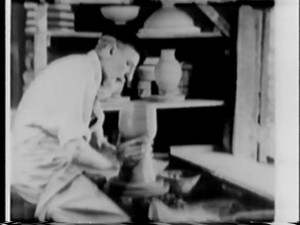
"Ceramics, by Kenneth V. Bloomer, ACL, and Elizabeth Sansom, ACL, is probably the most ambitious amateur film ever attempted on this particular subject and perhaps stands alone in its field. The makers of the film were fortunate in having the cooperation of a famous ceramic artist, Leon Volkmar, who maintains his atelier at Bedford Village, N. Y. It was here that the entire film was produced, its makers having imbibed the spirit of the artist craftsmen so thoroughly that every deft touch, every careful step in the process of making a lovely vase are recorded. The interior lighting and closeup technique are especially good, particularly in those parts where only the delicate focusing of a closeup will reveal the nuances of the artist's touch as he models. The sequences which show the firing of the pottery are unusually well handled and the whole is outstanding in its clarity of continuity. Such a film might be described as a "glorified industrial" but, more than that, it is an educational film in the best sense of the word." Movie Makers, Dec. 1933, 499-500.
Total Pages: 299
 Amateur Cinema