"Last, but by no means least on the list of honorable mentions, is Duncan MacD. Little's 'Voyageur's Trail,' a news film of a four-day canoe race in Canada. This film, photographed perforce under whatever conditions happened to obtain at the moment the action occurred, represents a remarkable achievement in amateur news filming, for which Little is to be commended in the highest terms." American Cinematographer, Feb. 1938, 78.
"In the educational class, E. N. Harrison's two reel subject, 'The Least Tern,' was excellent. For general showing the film unquestionably did have too much repetition, but for strictly educational use this would be an asset. More serious was the lack of necessary explanatory titles. The photographic technique was truly excellent, for virtually the entire film must obviously have been made with extremely long focus lenses, shooting from a blind, and the results on the screen were practically perfect." American Cinematographer, Feb. 1938, 76.
"Harrison and Harrison's offer of the firm's color meter in leather case, with six 1 1/4 -inch meter-matched filters in leather filter fold, was awarded Eugene L. Ritzmann of Berkeley, Cal., for his 'Garden Life.' The entrant has been making amateur movies for nine years, and his skilled work in putting on the screen in color by means of controlled timing the blooming of flowers demonstrated that his period of apprenticeship has long since expired. If a word of suggestion and distinctly not of criticism might be offered it would be the film would have greater value for the uninformed if titles should be inserted identifying the various flowers. The subject caused some tough eggs of the male persuasion to sit up and take notice. What it will do to the world of womankind it is not hard to imagine." American Cinematographer, Jan. 1938, 28.
"For his excellent composition in the 650-foot 8mm. Kodachrome subject of "El Camino Real" John E. Walter, retiring vice president of the Los Angeles 8mm. Club, was awarded the f :1.8 20mm. Astro lens contributed by Mitchell Camera Corporation. The subject is a most interesting pictorial tour of the Pacific Coast missions, with intimate shots around each." American Cinematographer, Jan. 1938, 28.
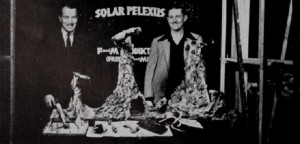
"Mel Weslander and Harry French of San Francisco, with 'Solar Pelexus,' were winners of Agfa's contribution of six rolls of film. As the misspelling of the title indicates, the subject was a farce portraying the journey of two men to another planet in a rocket." American Cinematographer, Jan. 1938, 28.
"'Europa Touring,' winner in the scenic class, was a 'honey' in any man's language. It was the film handiwork of Ellis M. Yarnell and C. Y. Kimball of Redondo Beach, Cal.; and was the story of a tour of Northern Europe, where the summer grass, as in northern countries, really is green — which last remark of course tells you the subject was in color. The two men have been making amateur motion pictures for seven years. Yarnell is a member of the Delta Kappa Alpha, Cinema Fraternity, U.S.C., and Kimball of the Amateur Cinema League." American Cinematographer, Jan. 1938, 28.
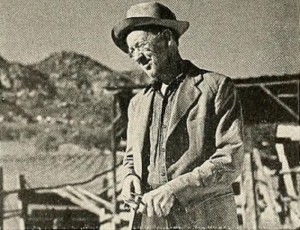
"The 'prize winner' of the title of course was just a goat who had pulled down for its owner a ten-dollar bill as a prize at the county fair, a sum which its owner promptly had sunk in the nearest bucolic palace of chance. The committee disregarded any possessive tendencies of its own in the goat line and decided the entrant really did know his onions when it came to making pictures. But of course every one even on the fringe of the amateur world knows J. Kinney Moore is one of the tops among the amateurs." American Cinematographer, Jan. 1938, 28.
"'Japan and Its People,' Dr. Roy Gerstenkorn's educational class winner, was a pictured visit to the homes and temples of Japan. Ignoring the cities in his search for the story of the Japan that is not known to the average visitor the doctor penetrated the towns and smaller communities. His picture was awarded a high rating on its photography as well as on his treatment of the subject. After the showing of this picture before the Los Angeles Motion Picture Forum last summer the local school authorities requested and received permission from the doctor to make a duplicate of it for school purposes." American Cinematographer, Jan. 1938, 27-28.

"The prizewinner for color, 'This Side of Paradise,' was in Kodachrome and entered by A. Scott Moorhouse of Toronto, a member of the Toronto Amateur Movie Club. The locale of the subject was the Italian and Swiss mountains and lakes. The decision on color or rather the reaching of it constituted one of the committee's chief headaches. There were some remarkable examples submitted. Mr. Moorhouse has a right to feel proud of his product." American Cinematographer, Jan. 1938, 27.
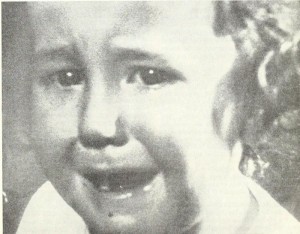
"Another Happy Day" was the winner in the home movie classification, the prize going to T. Lawrenson of Dundee, Scotland. Mr. Lawrenson is a member of the Institute of Amateur Cinematographers of London. Also is he a veteran of the American Cinematographer's contests, having been one of the three major prize winners of 1935. Also is the chief actor in the home movie a veteran, a child who now has reached seemingly the mature age of four years, and who of course was but two when he made his debut on the home movie stage in 'Happy Day.' He is a black-eyed, camera-unconscious and personable youngster, who proceeds on his lawful occasions in complete indifference to a live lens." American Cinematographer, Jan. 1938, 27.
Total Pages: 299
 Amateur Cinema