"A student of nature, Vince Hunter has filmed this delicate study romancing the wild shores of the Pacific coast with its thunderous waves on the rocky ramparts of Oregon and the calm of the tidal basins of the southern area. We feel the power in the maelstrom of wild combers, with the spindrift flowing in the wind like the mane of excited stallions racing to the shore. The birds, animals, and tidal growth on the offshore islands are rarely seen in pictures. An experience for those who love the sea and are charmed by its moods" PSA Journal, Nov. 1958, 46.
"A family picture built around the young daughter of Ira Radovsky. She is coming into the age when little girls want to go for a walk when things at home are not completely as they would like them. We follow the adventures of this young lady and enjoy every moment of it." PSA Journal, Nov. 1958, 46.
"Tullio Pellegrini has filmed a delightful little story in which boy meets girl and together they watch the nesting, hatching and feeding of the baby nightingales. There are the tender moments of meeting and getting acquainted; the disappointment when one cannot keep the appointed date; and the return of two hearts to their earlier meeting place to the welcome and song of the newly grown nightingales" PSA Journal, Nov. 1958, 46.
"An amateur film made by and starring the husband and wife duo, John & Evelyn Kibar. The Kibars are on a search for a hobby, and decide upon filmmaking. A domestic mishap by Mrs. Kibar results in their film being edited incorrectly. Title cards displaying dialogue are dispersed throughout the film." Chicago Film Archives
"Amateur travelogue of an extensive trip to Australia photographed and produced by "The Traveling Sebrings," Lewis B. Sebring, Jr. and Alice P. Sebring. Lewis B. Sebring, Jr. was a journalist and war correspondent for the New York Herald-Tribune, who reported on combat in the Southwest Pacific Area theater during World War II. The trip documented in this film, which they referred to also as "An Odyssey to Australia" covers the entire continent of Australia, from Sydney, Melbourne, Adelaide, Port Augusta and Kalgoorlie, Perth, and Brisbane, and everything in between, usually documented via passenger train. In each city, the film expertly documents landscape, architecture, and people, as well as rural areas and animals." Wisconsin Historical Society.
Edited film "chronicling travel through Nova Scotia, Prince Edward's Island and Cape Breton. Film includes scenic landscapes (Langdale/Bowen Island, Queen Elizabeth Arboretum, Yoho National Park, Yoho Glacier, Twin Falls, Bow Lake, Columbia icefield, Athabasca Falls, Banff, Gaspe, Cape Breton Highlands National Park), urban scenes, fishermen, outdoor garden of religious statuary, light houses, bag pipe players, Canadian Royal Mounted Police and the Lovat Scots, a boag and drum corp," Human Studies Film Archives, Smithsonian Museum.
"A compilation film documenting the many Augustas--streets, storefronts and cities from Montana to Maine--that Scott Nixon encountered as a traveling salesman based in Augusta, GA." Moving Image Research Collection, University of South Carolina
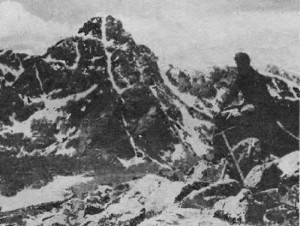
"In a color chucklelogue Midgley will show spectacular pictures of Colorado today and give a nostalgic look into Colorado's colorful past. . . . The film features Denver, Pikes Peak, the Garden of the Gods, the Royal Gorge, Estes Park, ascent of Longs Peak, Trail Ridge Road, skiing at Aspen, and pictures of ghost towns and horseless carriages. Some of these pictures, filmed in excellent color years ago during the last days of the Narrow Gaugers, could never be replaced." The Clock Tower, Oct. 17, 1969, 1.
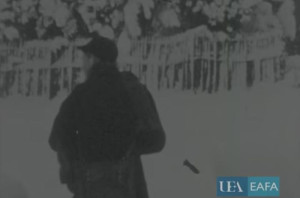
'Scenes of Frinton covered in snow and ice. A man plays with a dog and people dig paths through the snow. People attempt to walk through the snow; some out to enjoy themselves, others seeking to carry out a normal routine of shopping and other daily business. A man tries to unlock his frozen car. In the town centre there is a shop with a 'sale' sign in the window. The area is practically deserted. Hammonds' filling station is covered in snow and deserted. A lorry attempts to drive through the snow, but is having to rely on a push. One vehicle that does manage to take to the road is a Land Rover. Finally, a snow-covered St. Mary's Church and frozen power cables brought down by the severe conditions' (EAFA).
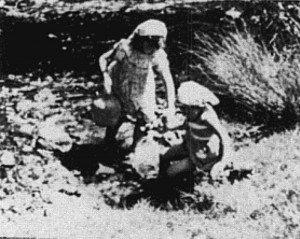
"Antonio Cernuda has created a pictorial mood, a feeling of being there, and a desire to live it again. His choice of music has contributed a great deal to this delightful picture. It begins in the early fall and we move quickly to the gathering of apples, processing, and the bottling of cider. There are celebrations of the gathering of the harvest, girls and boys in native Spanish dress, with the frolic of the occasion and the solemnity of the religious spirit. The first snow of winter, as the leaves are about gone, and on into the heavier snows and ice of winder as the people go about their daily travels—afoot, by horse-drawn vehicle, and train. The transition to spring is so skillfully set forth with the melting snow and turbulent streams that we are hardly aware of the passing of winter. Soon there is a burst of spring everywhere and then summer with its crops, vacation activities, boating, fishing, tug-of-war, and outdoor Mass. The picture opens and closes with artistic views of the mountainous country. We might think of this as the four seasons. Asturias, with its deep canyons and mountains, with scars of its heroic history, that have the darkness of coal in its womb, the whiteness of snow on its head, and the pink of apple blossoms on its body. Asturias lets her men go out into the world with the certainty that the homesickness for her beauty will always make them return." PSA Journal, Nov. 1957, 31.
Total Pages: 299
 Amateur Cinema