"The story… opens in the sixteenth century with a scene showing the friendly relations between two neighbouring families as indicated by Roger de Hatherley and Richards Hawkins fishing the trout stream dividing their respective estates. Next we are shown their descendants at war over the fishing rights of the same stream, a family feud begins, and a love story which, although it does not run smoothly, ends happily" (Lovell Burgess 1932: 11).
"This film opens when Ann’s swastika necklace arrives back from the jewelers. Next we see Jim and Ann spoon at a beach party, until a jealous tiff causes her to walk off into the arms of a car-owning Lothario. On a nearby heath, Ann escapes from her randy driver and walks off alone. Next day, Jim, learning that Ann is missing, grabs his pistol. On the heath, he finds Ann's swastika on the ground and sees her bound and gagged by gypsies. They get their comeuppance and Jim gets his Ann. Robert G Torrens, the producer, makes a cameo appearance as a gypsy kidnapper in the latter part of this film" (BFI Player Online).
"another splendid example of what can be done by a lone worker actuated by keen civic pride, and the hearty applause with which it was greeted showed that both its artistic and photographic merits were fully appreciated. We understand that this film has now been shown in all of the eighteen Bristols in America, and we hope it will be followed by many other civic films of a like nature" (HMHT 1933: 273).
[Possibly also known as Bristol – Birthplace of America, directed by F. G. Warne]
"an interesting film of a holiday afloat" (Lovell Burgess 1932: 21).
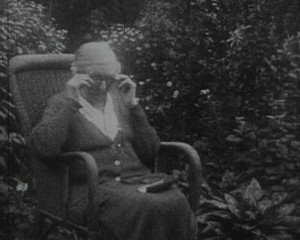
"Amateur filmmaker, cinema historian and railway engineer H.A.V. Bulleid uses slapstick humour and witty intertitles in this farce.When the family dogs team up to steal and bury Grandma's glasses, they spark a farcical chain of events in which our hapless hero attempts to track down the missing spectacles. But even when the glasses 'turn up', the ordeal isn't over as they get stuck up a tree and switched with a bomb. And in the end, it's sure to be the dogs who have the last laugh" (EAFA Database).
Documentary footage of the 1932 summer Olympics held in Los Angeles, California. Produced by the Los Angeles Amateur Cine Club.
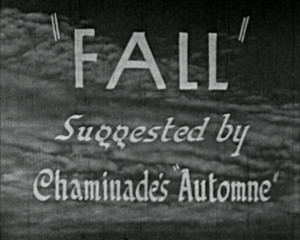
"An impressionistic, visual interpretation of Chaminade's Automne" (EAFA Database).
Total Pages: 299
 Amateur Cinema