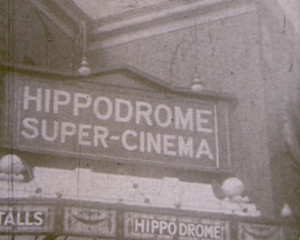
"Amateur filmmaker, cinema historian and railway engineer H.A.V. Bulleid pays tribute to his dual loves of cinema and rail in an experimental short film. Bulleid uses 'metric editing' - the first of Russian director Sergei Eisenstein's 'methods of montage' - in which cuts are dictated by the number and sequence of frames, not what occurs on screen. First, Bulleid pays tribute to cinema, featuring the facades of picturehouses around Derby in static shots, which build to a dazzling crescendo of short shots. The section on trains features longer views of the railyards in operation, with trains shunting and coming into the station, before a final section focuses on trams, following electric streetcars as they move down urban streets" (EAFA Database).
Based on PG Wodehouse novel Something Fresh.
"a legend of the origin of a Druid’s Circle near Matlock which goes by that name" (HMHT 1933: 335).
[Also known as Conway]
"only our second film – but good enough to be picked from among the whole of the entry in The Era Contest of 1932 to represent Great Britain in the International Contest, in which it took second prize… The film, which was but 180 feet in length, was an attempt to portray pictorially the workings of an unhinged mind; a subject, you will agree, that no professional could possibly exploit. The production was, maybe, a trifle crude – I would be the last to deny it – but at least the theme was original" (Mellor 1933: 102).
[Also known as Foiled or The White Slaver]
"the story deals with the activities of a notorious blackmailer who gets a financier and his sister into his clutches" (HMHT 1932: 222).
"a crime story which has a background of blackmail and intrigue" (Lovell Burgess 1932: 17).
[Also known as The Tourist Trophy Races]
"a war film… deals principally with submarines… an almost full-sized submarine was built out of sheet-iron and wood; the very convincing interior of the aforesaid submarine was built in a garage; and merchant ships (models) were ruthlessly blown up by a torpedo (ditto, bought at Woolworths), which zipped through the water (by a string wound on a Kodak rewind) and left a wicked-looking wash (milk)" (R.S. 1932: 9).
Total Pages: 299
 Amateur Cinema