"Members of the Preston Family on holiday in the Lake District. The film includes various landscape shots of Lake Windermere and the boating activities that take place around the pier and lakeside. Concludes with footage of farm workers stacking hay on to a horse-drawn cart; farm animals grazing in the fields and a man and woman playing with some puppies in a garden." (NWFA Online Database)
"Lancashire's Fylde Coast resorts have year-round appeal, as we can see in this reel from the early 1930s. The seaside is not just for swimming and sandcastles; you can feed seagulls at Southport, or slide down sand dunes with your dog, or stroll across Blackpool's wide beaches on a cold day. And, at the time this film was shot, this coastline had many fine piers to enjoy, whatever the weather."(BFI Player)
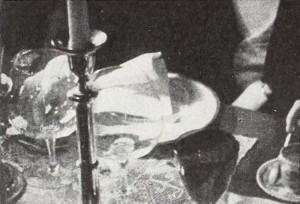
"I'd Be Delighted To!, directed and photographed by S. Winston Childs, jr., ACL, is that kind of production often planned but seldom made — a film story told entirely in closeups. Presenting the simple incident of a dinner a deux in a gentleman's apartment, the picture runs through 400 feet of brilliantly chosen, strikingly filmed, significant closeups. It is adroit, amusing and sophisticated, and a splendid example of what, with skill and care, can be done in this distinctly advanced amateur filming method." Movie Makers, Dec. 1932, 562.
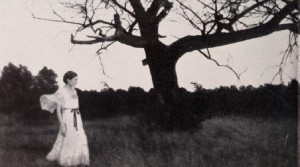
"In his one reel film, Girl with a Dress, Clyde Hammond, ACL, has made an appealing and remarkably successful attempt to portray a drama of the spirit rather than of action. Through long weeks of bitter economy a girl accumulates enough money for a new dress. It arrives from the mail order house just in time for a summer's picnic with her friends and, happy in prospect, she wears it proudly. Then, because in it she is more charming than they, her friends will not like it, make mocking fun of her and she leaves them in tears. Stumbling home, she is caught in a shower and the dress is ruined. A simple enough tale, but in its very simplicity and sincerity lie the strength of downright tragedy. It was planned and directed with imagination and played, in its leading role, with definite and sensitive skill." Movie Makers, Dec. 1932, 562.
"Articles in Movie Makers have often advocated experimenting with travel continuities by selecting a single theme and illustrating it with sequences made in many different countries. The entertainment value of this method is beautifully illustrated by Water, filmed by B. H. Blood, ACL. This picture is made up of sequences of water, waterways, wells and ice in a variety of places in the world and ends with a sequence in the home of the maker. Any emphasis on mechanics which this theme might seem to entail is entirely obviated by the dramatically interesting scenes that Mr. Blood selected to illustrate his idea." Movie Makers, Dec. 1932, 561-562.
"The film Water, 400 ft., 16mm which took a first award by the unanimous vote of the judges in a recent interclub movie contest, was drawn from more than 7500 feet of film, exposed over a period of nearly four years. It is a splendid example of the synthesized short subject, shrewdly built up from scattered material around a simple continuity theme. For this film the continuity idea was found in the common phrase, "Water, water everywhere." Scenes of water in many places, in many forms and in many uses were compared and contrasted, each new sequence being connected to the last by a clever and effective title. The film was produced by B. H. Blood, ACL, in Hartford, Conn., who deserves every credit [or his intelligent adaptation of the best features of the professional subject." Movie Makers, July 1932, 322.
"Russell Sage Foundation, made by Theodore Huff, ACL, for the members of the staff of Russell Sage Foundation and dedicated to John M. Glenn, retiring General Director, offers an interesting solution of a very difficult cinematic problem. It was desired to present glimpses of the work of the various departments of the Foundation, to include members of the staff of each department and to give the highlights of their achievements under Mr. Glenn's direction. Although the problem was complex, Mr. Huff succeeded in making a smooth and entertaining picture full of cinematic interest." Movie Makers, Dec. 1932, 561.
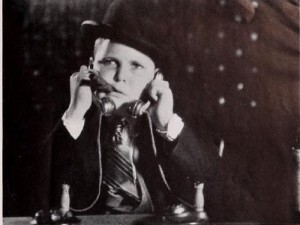
"In Little Geezer, running 400 feet, Theodore Huff, ACL, has produced one of the most able and amusing burlesque film stories of the amateur year, repeating his success of that earlier satiric classic, Hearts of the West. Again he has used, with amazing directorial facility, the neighborhood youngsters as his only actors. Again he has aped, with his own peculiar genius, the threadbare cliches of professional drama, poking fun in his filming as well as his titling. Little Geezer offers fine examples of real cinema, is the sort of thing amateurs can do as well or better than professionals and is delightfully amusing in the process." Movie Makers, Dec. 1932, 561.
"Theodore Huff, ACL, has done it again! That lone wolf producer of Hearts Of The West has paralleled the gorgeous fun of his earlier panning of the purple plains as he takes the gangsters for a ride in Little Geezer. The Big Shot, his lieutenant, Greta Garbage (" — more to be pitied than sniffed at") and Scarface Macaroni are all there, played by the neighborhood kids, no one of them over eleven years old. Through their naively serious acting and his own genius at direction and editing. Mr. Huff has riddled with bursts of laughter the machine gun monarchy of professional filmdom." Movie Makers, Sept. 1932, 398.
"Drifting, a two reel photoplay produced under the direction of Jack Navin, ACL, is an old school melodrama, planned, played and directed to ring the last harsh change on the "wages of sin" motif. It is distinguished by consistently dramatic lighting, a smoothly sequenced filming plan and a definitely mature understanding of cinematic treatment. In it a large cast plays well and with a thorough seriousness that adds much charm to the original melodramatic conception." Movie Makers, Dec. 1932, 561.
"Another melodrama, delightful in its serious characterizations and adroit in its cutting and camera treatment, has been completed under the direction of Jack Navin, ACL, producer of Sophistication and Those Mad Barclays. The new work is Drifting, a direct descendant in the Navin tradition, as it tells a tale of the relentless downfall of too, too pretty Ellen Rowen in vain search of her kidnapped little brother. Once the toast of Paris, in the end a drab of Montreal slums, Ellen drifts inevitably to a harsh fate, protesting bitterly on her pathway that she "was once a lady." Elizabeth Sutherland played Ellen with " a defensive delicacy that was touching. Other parts were ably carried by Virginia Simmons, Margaret Newnan, Gretchen Rickel, Mary Reynolds, Nellie Navin, Martha Blodgett, Coman Munroe, Junie Newnan, Ted Newnan, Bobby Sutherland, Fred Griffiths, Bill Laurie, Thayer Hutchinson, Bob Drysdale, John Hutchinson, Edward Mackenzie, Bill Newnan, the Blodgetts and Mr. Navin."
Movie Makers, Dec. 1932, 575, 577.
"Among the films awarded honorable mention is The Grand Teton Country, carrying with it a breadth and sweep of all outdoors, a Kodacolor film by H. W. Voss, ACL. This picture is, first of all, an eloquent and colorful reply to those who do not believe that long shots can be taken successfully by this process. Time and again, in viewing this film, one is astonished by the clarity and detail of distant mountains, rearing their majestic, snow capped heads up into the cold blue of the sky, while the foreground is shown in all of its true colors. Mr. Voss has proved to skeptical Easterners that Rainbow Falls really lives up to its name. His Kodacolor camera, skillfully handled so as to produce a dark background for the rainbow formed by the sun shining on the spray, reveals perfectly that faint, tenuous beauty which is all the more remembered because evanescent. But solid, palpable colors are pictured here, too. Mountains and canyons, lakes that are mirrors, desert flowers and all the glowing colors that are part of the West, are arranged on Mr. Voss's film palette. Especially well considered was his continued use of the various neutral density filters in order to give distant shots their correct value in the brilliant sun and the inclusion of interesting action in each scene." Movie Makers, Dec. 1932, 560-561.
"Thornwell Orphanage, planned and made by Willis Osborn, is a film study of Thornwell Orphanage, showing the scholastic, industrial and religious training of the youngsters there and presenting a subtle argument for its support. This is a difficult subject because of the problem of selecting significant and coherent action from among the almost endless possibilities. Most welfare films are too discursive and too general in treatment to secure the effect desired. Mr. Osborn has succeeded in avoiding this and has produced a film as coherent and informative as it is well photographed." Movie Makers, Dec. 1932, 560.
Total Pages: 299
 Amateur Cinema