The Totem Group was a club within the Victoria Amateur Movie Club -- a sub-group of 16 mm users that banded together to produce their own film, The Princess and the Frog "... a nine-minute, black-and-white, sound-striped fiction story written by member Walter George." (Sharcott)
"... a view of the tourist side of the city through the eyes of Captain Vancouver, brought to life from the golden figure atop the legislature buildings." Captain Vancouver was played by Victoria entertainer Jerry Gosley. The process of shooting, editing and post-production is described in Margaret Sharcott's Daily Colonist article.
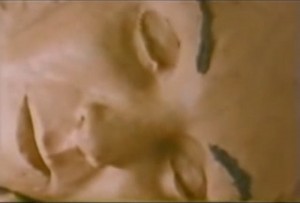
"An exceptional portrayal of the world's creation, from a barren landscape to the emergence of the Woman and the Serpent, ending with Society as we know it. The film is technically unsurpassed in plasticine animation." Canadian Filmmakers Distribution Centre.
"Color film celebrating Turner's love for classic automobiles. Turner discovers an old road named Callao and becomes interested in exploring the dirt road with his classic Dodge. Film shares the history of the pony express in Utah." Church History Library.
"Film is mostly animated featuring toy cars and trucks on paper roads with paper trees. The highlights of the film are a roundabout, which is a type of circular intersection and signs which have more than one meaning. The film also includes a human man and woman who seem to be driving one of the cars" Archives of Ontario.
"Film is about what happens when a two-minute power failure causes a blackout. Cameras caught before and after scenes in four houses, titled 'Daughter's Date,' 'The Ladder,' 'Cat and Dog,' and 'Women.' " Archives of Ontario.
"Film begins with the promotion of a driving school that states that you can get your licence after one lesson. The woman who signs up for the class goes through an hypnosis-like experience. She ends up in an accident only to learn that the 'school has absolutely no responsibility for accidents.' " Archives of Ontario.
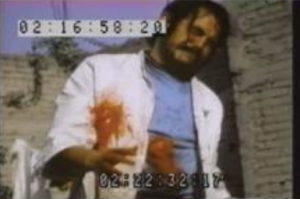
"El paletero cuenta la historia de un vendedor de helados y paletas (Héctor Suárez) que recorre las calles de la ciudad. Es simpático: juega volados con los niños, conversa amistosamente con una criada que ha salido a la calle para hacer el mandado (July Furlong). De pronto un grupo de policías judiciales, vestidos de civil, deciden acosarlo. Se acercan intimidantes a la pareja. Rompen los conos de galletas para helado. El paletero siente pánico y huye por las calles de la ciudad. Es perseguido por los judiciales. Intenta esconderse en las ruinas de una casa abandonada, donde es seguido por uno de los policías. Luchan y el paletero consigue quitarle la pistola. Amenaza al policía y reemprende la huída. Al final encuentra un nuevo escondite en una vecindad. Presa del pánico, el paletero dispara sobre sus perseguidores, hiriendo a dos. Los policías lo ejecutan, y de paso matan a un niño que jugaba en el patio de la vecindad y que había quedado situado en medio del tiroteo" (Vázquez Mantecón, 2012).
El paletero [The popsicle man] tells the story of an ice cream and popsicles seller that goes around the city streets. He is nice: he plays coin toss with children, talks kindly with a maid that has left the house to run some errands. Suddenly a group of policemen, dressed as civilians, decide to harass him. They approach the couple in an intimidating manner. They break the ice cream cones. The popsicle man feels panic and runs away through the city streets. He is chased by policemen. He tries to hide in the ruins of an abandoned house, where he is followed by one of the policemen. They fight and the popsicle man takes his gun. He threatens the policeman and starts running away again. At the end he finds a new hiding spot in a vicinity. Overcome by panic, the popsicle man shoots wounding his persecutors. The policemen execute him, and they also kill a child of the neighborhood that was caught up between the shooting" (Vázquez Mantecón, 2012).
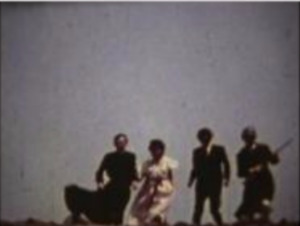
"Una historia sobre el acoso sufrido por la juventud por parte del mundo de los adultos. La posición alternativa del grupo [de realizadores] se hacía explícita desde las primeras tomas, en donde los créditos aparecían escritos en las paredes de una casa en ruinas, omitiendo los apellidos y dejando solo los nombres de pila de quienes participaron" (Vázquez Mantecón, 2012).
"A story about the harassment suffered by the youth from the adult world. The alternative position of the group [of filmmakers] was made evident from the first shots, where credits appeared written on the walls of a house in ruins, omitting last names and leaving only the first names of the participants" (Vázquez Mantecón, 2012).
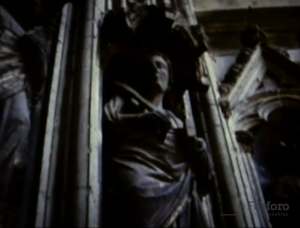
El filme utiliza rimas y música para describir la arquitectura gótica de Vitoria, capital de Álva en España.
The film describes through rhymes and music the gothic architecture of Vitoria, capital of Álava in Spain.
Total Pages: 299
 Amateur Cinema