"A documentary made in association with the Bournemouth, Poole and Christchurch Wing of the Air Training Corps (ATC) produced under the auspices of the Air Ministry. A young man works in a grocer's shop and wraps up slices of bacon in a newspaper telling of Hitler' s victories. He cuts out a piece about the ATC. With friends he goes to the cinema (the Moderne) to see 'Week-End in Havana' (1941) and in the foyer signs up for the ATC as a flight mechanic. (EAFA Database)
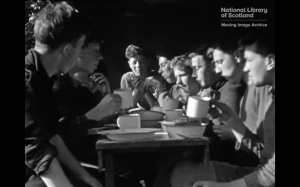
"Glimpses of Life and Work in a School Forestry Camp "Somewhere in Scotland." (EAFA Database)
"A documentary about peanut farming in the South Burnett district of Queensland. (EAFA Database)
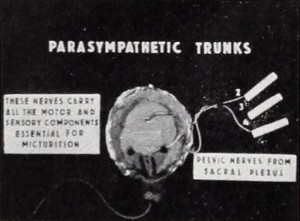
"Dr. A. I. Willinsky has made an important contribution to medicine in his film Cystometrography. The initial part of the movie shows brilliant use of models in this amazing recording of bladder pressure. The second portion deals with the machines used in study technique and includes one developed by Dr. Willinsky himself. The picture culminates with a series of charts, showing the wide variety of clinical records kept. The film is a very intelligently planned, comprehensive statement of the method that Dr. Willinsky is presenting." Movie Makers, Dec. 1945, 496.

"Bituminous coal is the major actor in The Power Behind the Nation. This sound on film color movie, made by Waldo E. Austin for the Norfolk and Western Railway Company, shows effectively the tremendous part played by soft coal in the development of the nation. The picture is well filmed and thoroughly integrated by an excellent narrative, while lead and end titles are appropriately double exposed on shots of moving trains, which serve to drive home the point that the railroad is the important link between the mine and the consumer. Exceedingly fine sequences of coal mining and well handled shots of the railroad equipment are high points. This film is a fine example of an industrial motion picture produced without the excessive equipment and appropriations sometimes thought to be necessary for such an effort. " Movie Makers, Dec. 1940, 604.
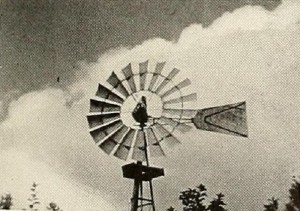
"Simplicity and directness mark How to Use Filters, made by Kenneth F. Space for the Harmon Foundation. A teaching film must be free from overburdening theory. Mr. Space knows when to forget the deep dark secrets of theory and when to speak out about the actual, practical facts. His film was well filmed, and the subject matter was chosen to present the case clearly and in an interesting fashion. The user of a movie camera will learn more about filters from seeing this film than he can gain from reading many pages on the subject. It tells just what to expect from various filters and stresses the results obtained from their use more than it does the reasons why they work. Mr. Space's movie is one of the few educational films which are simple enough to be effective." Movie Makers, Dec. 1940, 604.
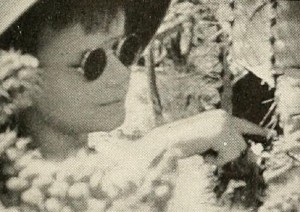
"Sahuaro Land, by Frank E. Gunnell, is as clever and painless a teaching film as one may find in many a classroom screening. Here, in a colorful Arizona cactus desert, we find the surefire ingredients of a boy and his dog. The boy is an enthusiastic nature student who, in the course of his explorations of the region, contrives to make sundry entries in his notebook, which find their way to the screen. These data are all so natural a part of the story, however, that the information conveyed does not assume the rather forbidding status of an instructional title in any case. The outdoor color work is excellent, and the viewpoints are well chosen. Mr. Gunnell's use of telephoto technique for making closeup studies of distant, inaccessible objects (such as the bloom atop a tall cactus) was particularly effective. We learned a lot from this film." Movie Makers, Dec. 1940, 604.
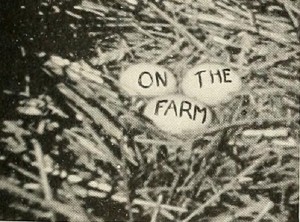
"Sunlight and morning noises, the rich, sweet smell of clover, the hot grain fields at midday and windmills drawing water from the deep earth — these are part of the common life of an Ohio farm that two young girls, Marjean and Mary Elizabeth Headapohl, have put into their film, On the Farm. It is a record as American in feeling as Walderts Pond, even though unconsciously so. Innumerable closeups show the generousness of the earth in Ohio, whether in flowers around the house or in the grain and vegetables of the fields. Day after day, the imponderable clouds drift by. Peas are shelled for dinner; the cows are brought in from the pasture by the collie dog; the farm hands return to the barn after a day of harvesting wheat. There is little more shown, in substance, and presently the film ends. But it leaves one with a conviction that this simple way of life in America cannot easily be changed, and that, as long as people of good hearts make records such as this, we cannot wholly forget that the Republic was founded on the plough." Movie Maker, Dec. 1940, 603-604.
Total Pages: 299
 Amateur Cinema