"Listen is an appropriate title for a film that won the MPD Sound Award for Richard Garman of Salt Lake City. In 9 minutes of color you will learn the life story of a cricket. You may have heard the sound of its chirping all your life, but now you will be face to face with it just as you've always heard it - then in slow motion (or speed) and then even in slower motion (or speed). You have got it to hear it to believe it" PSA Journal, Nov. 1969, 57.
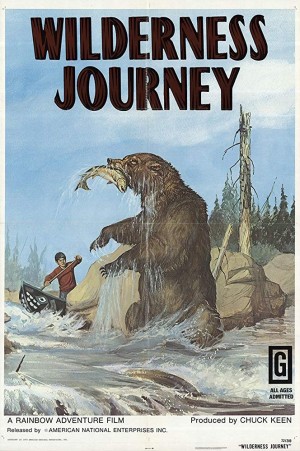
"Joniko and the Kush-Ta-Ka, the PSA Film of the Year, is a story of Alaska by a native, Charles Keen of Juneau. In 45 minutes of color and spectaculars, Mr. Keen shows us an Alaska that is beautiful throughout the seasons of the year. The law of nature is never questioned and only strength and courage survive. As if all this as not enough in the way of survival difficulties, there is added the threat of the Kush-Ta-Ka. You struggle, struggle some more and pray with young Joniko in his adventuresome trip to get help. It is truly a film of the year" PSA Journal, Nov. 1969, 56.
"Hong Kong. There have been films and films about Hong Kong, but this one tops them all. Jack Babkes of Brooklyn takes you on a 12.5 minute tour of one of the most interesting spots in the world. Naturally it's in entertaining color, very entertaining otherwise, too. You'll feel that "you-have-been-there" " PSA Journal, Nov. 1969, 57.
"Escape, a black-and-white film from Richmond, Surrey, England, is by Alan Lavender. This is a story of a small boy's life under a difficult marital situation and how all of the problems are solved with one final blow. The story is not new, but is handled cleverly and holds audience interest to the very surprising end. 14 minutes" PSA Journal, Nov. 1969, 57.
"Andros Blue Holes had to be in color to show us that the Blue Holes are really blue. J. Benjamin of Toronto takes us on 18 minutes of the most fascinating underwater filming ever attempted. The beauty and mystery of the Blue Holes far outweigh the dangers involved in exploring them. Very entertaining and very educational" PSA Journal, Nov. 1969, 57.
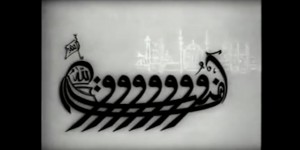
“The question ‘How was the mentü ship Steered’ bears two meanings: as inference in the sense of ‘faith,’ as well as the relation between the notions of ‘imagery, logos, and action.’ The answer is ‘divine love,’ regardless of the form of the question: the Amentü ship is navigated by the love of God. ” Zeynep Gemuhluoglu, tsa.org: https://www.tsa.org.tr/en/yazi/yazidetay/67/%EF%BF%BD%EF%BF%BDmentu-gemisi-nasil-yurudu (16 Oct 2019).
“Ruhi Su ve Rahmi Saltuk türküleri eşliğinde yoksulluk ve emek sömürüsünü ve mücadeleyi, direnişi farklı, ilginç bir kurgu ile anlatmış. 13 dakikalık 1969 yılı koşullarını düşünerek izlemek gerekiyor.” Sinematek.tv: http://sinematek.tv/kordugum-1969-2/ (15 Oct 2019).
“Accompanied by Ruhi Su and Rahmi Saltuk’s folk songs, the film tells the story of poverty, struggle, and resistance in a different way, with an interesting montage. This 13-minute-long film requires audiences to acknowledge the contexts of the year 1969 in viewing.” Sinematek.tv: http://sinematek.tv/kordugum-1969-2/ (15 Oct 2019).
"Film focuses on women with short skirts walking inside or outside, shopping, with baby carriages or shopping carts, sitting down or walking down stairs" Archives of Ontario.
Jazzflections is a sound and color blending film by Leon Paquette of Lynn, Mass. It's 2½ minutes of experimenting in how music looks color-wise and shape-wise. It's short enough to be entertaining and yet long enough to let you know how some other guy feels about the sound of music," PSA Journal, Mar. 1970, 44.
Total Pages: 299
 Amateur Cinema